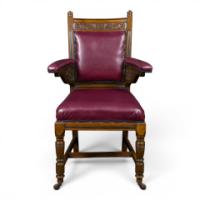
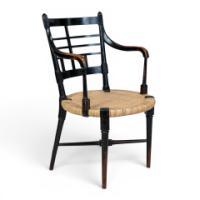
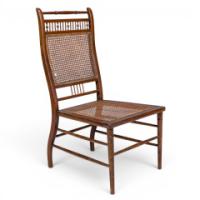
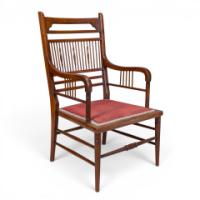
Exhibition Page
EDWARD WILLIAM GODWIN THE GODFATHER OF THE MODERN MOVEMENT.
The Anglo-Japanese & Aesthetic Movements,
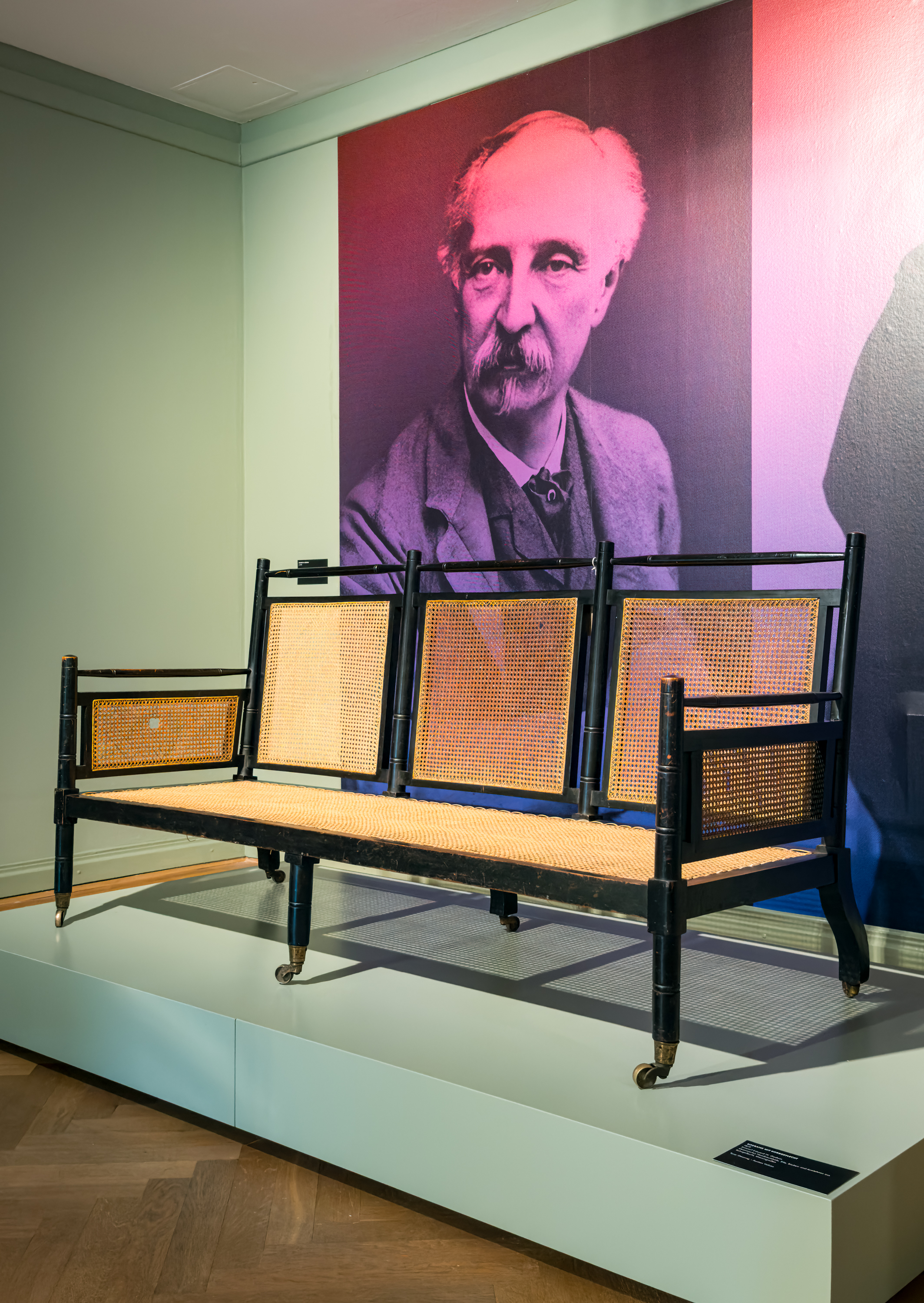
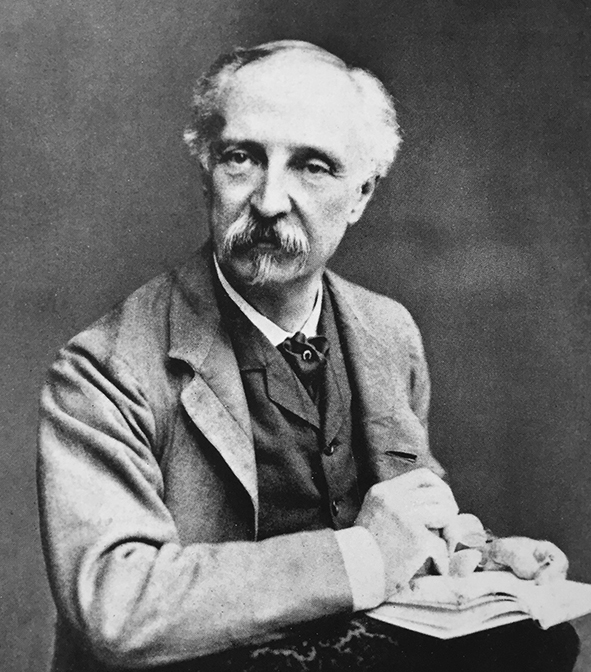
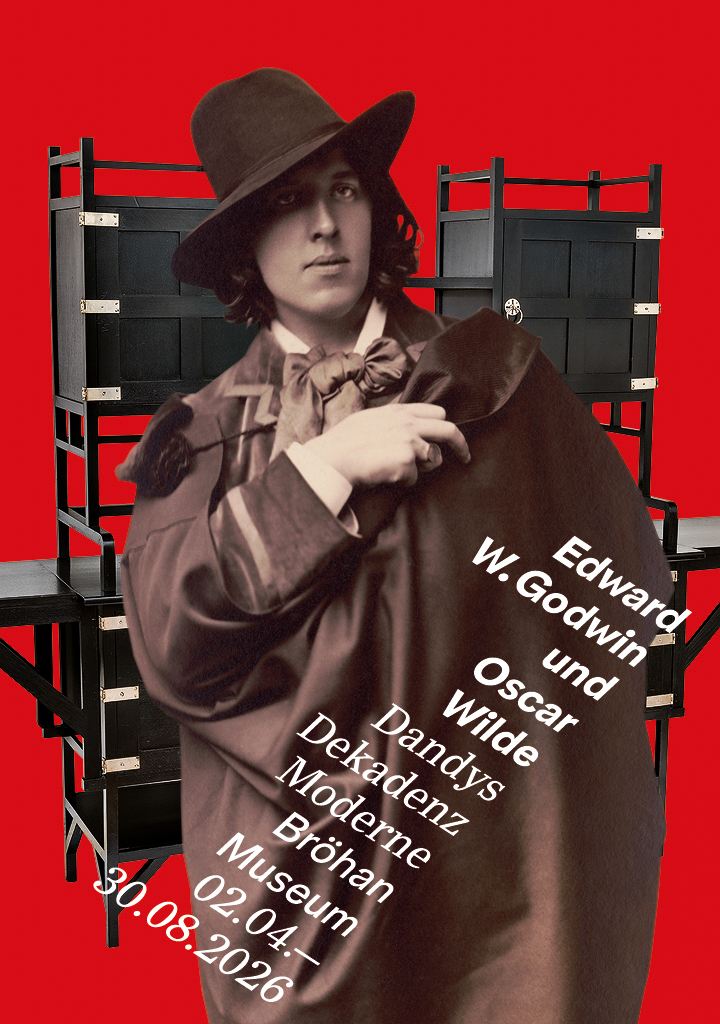
Edward. William, Godwin born in Bristol in 1833 a close friend of William Burgess, Oscar Wilde & James Mc Neil Whistler a collaborator with Whistler, & he also designed furniture & Interior's for Wilde & Whistler. He lived out of wedlock with the most famous stage actress of the time Ellen Terry whom he had 2 children with something which was somewhat scandalous in those strict Victorian times.
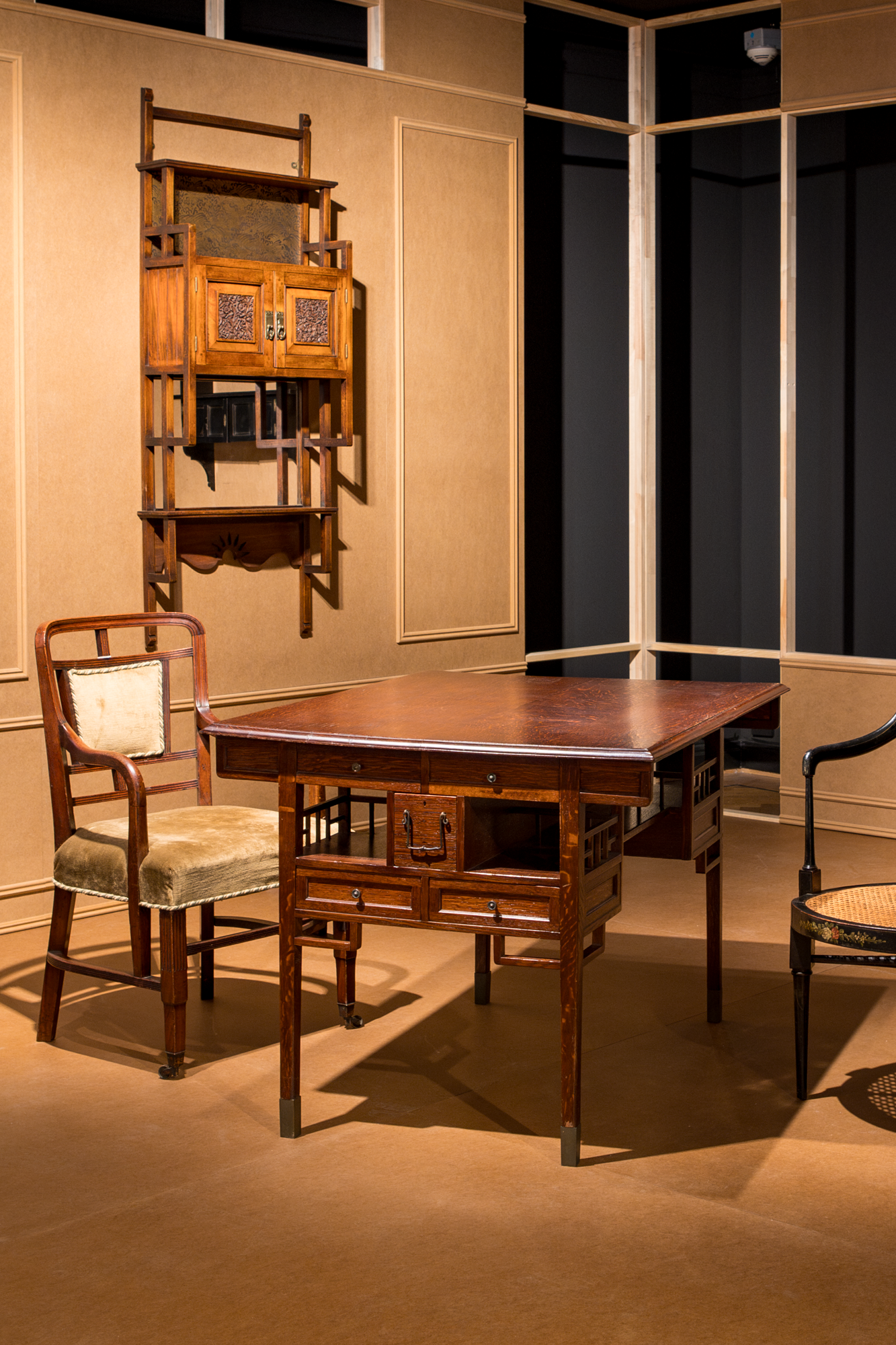
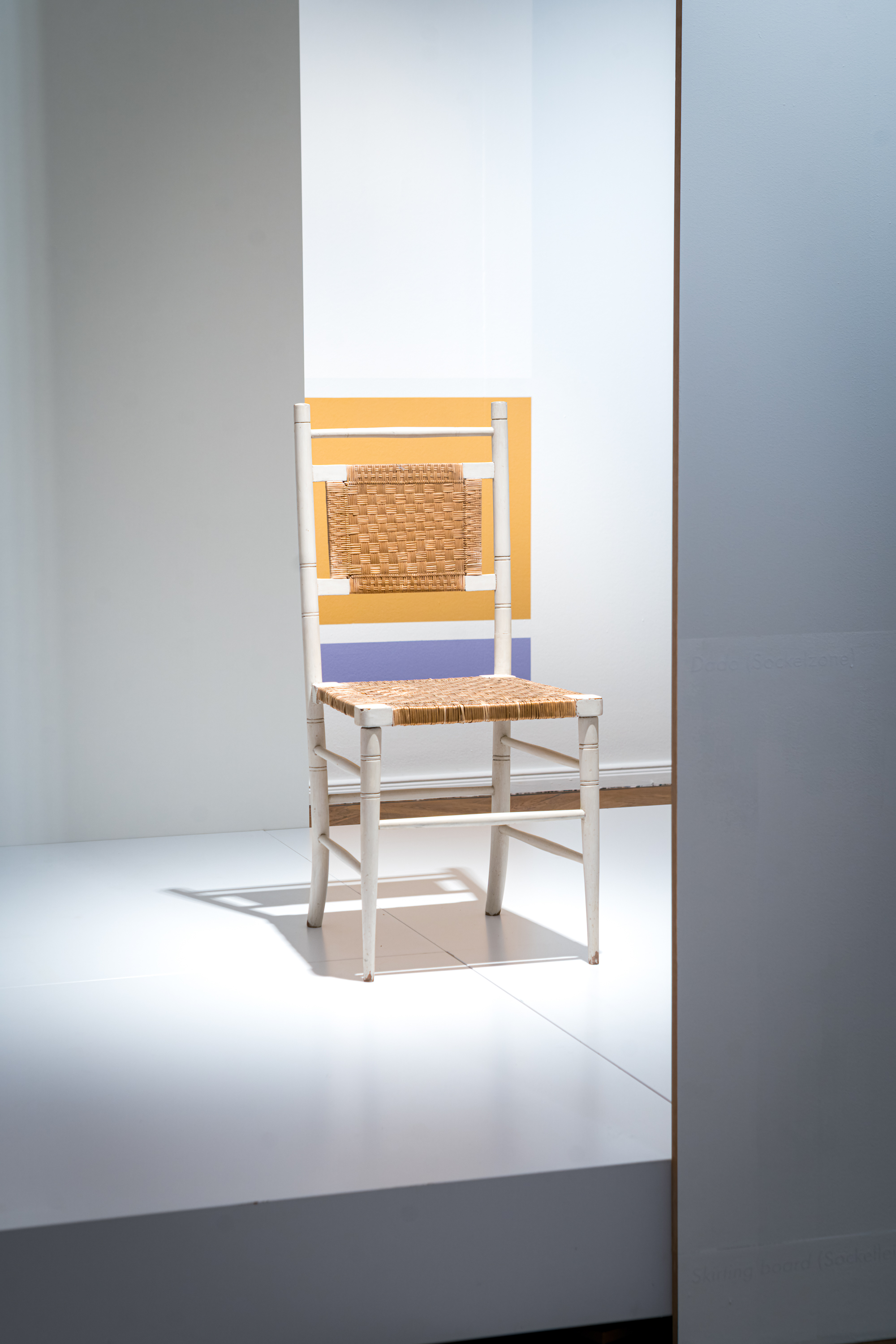
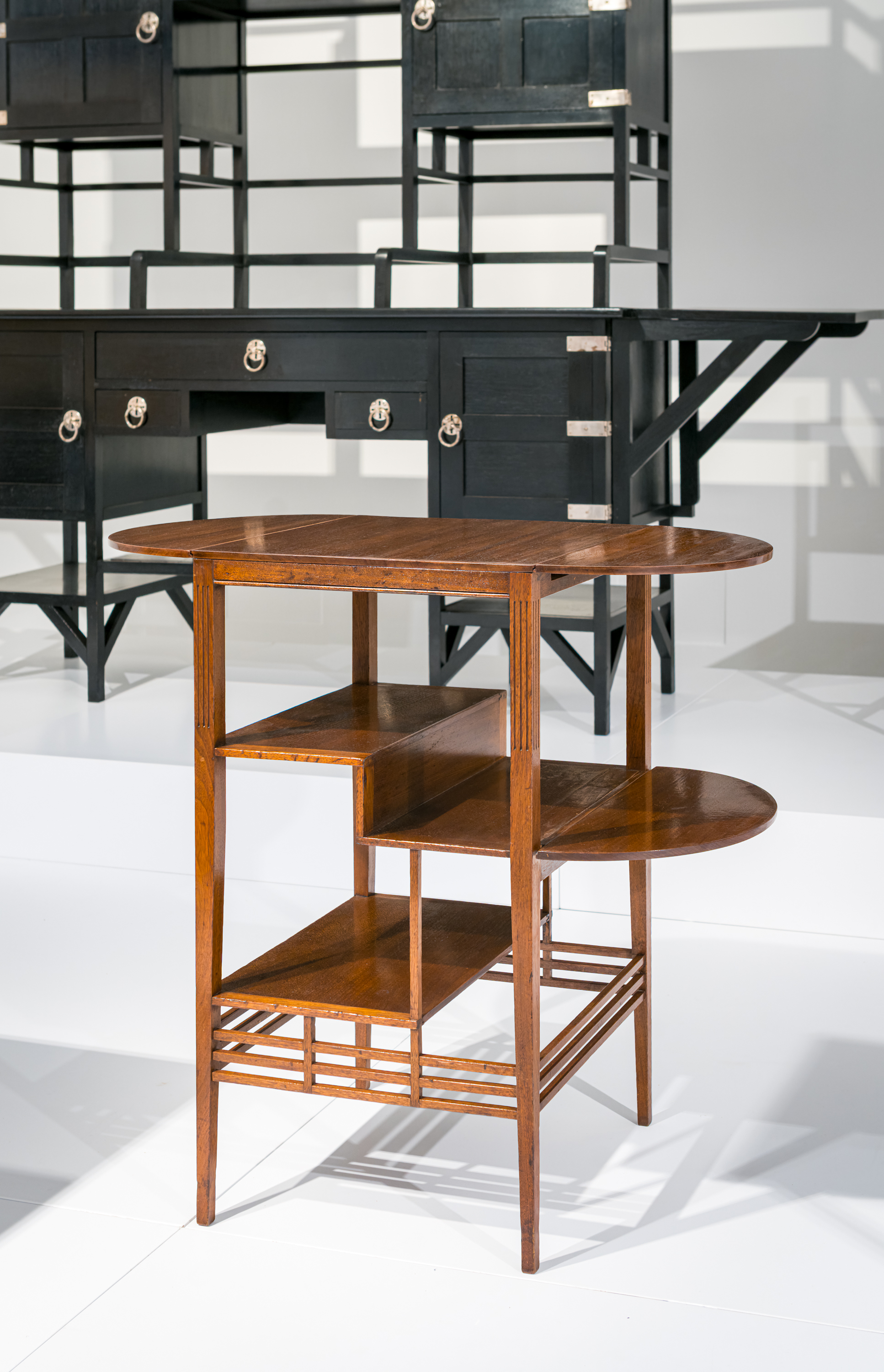
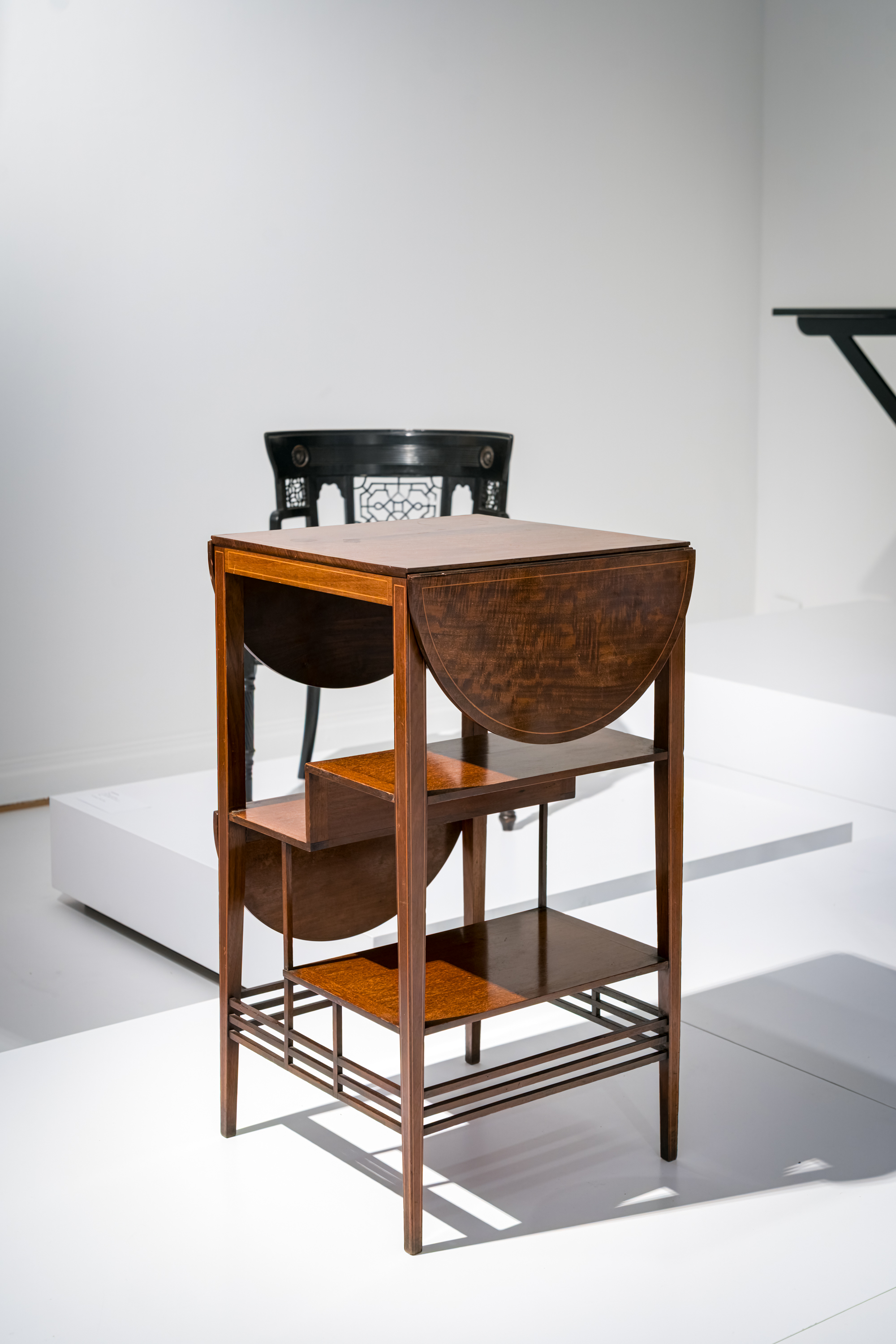
Godwin a true pioneer of his day, a revolutionary of his time the Godfather of the modern movement & a significant leader in the influence on domestic design, one of the first people to incorporate economy & hygiene into his furniture, his thinning designs using as little wood as appropriate yet making the piece as strong as possible, so even a maid could move the furniture on her own to clean behind & under & designed furniture without dust attracting area's so important in an age where disease was rife. His disbandment of clumsy or over ornate detailing his lean toward line & form in a purely Japanese style yet he never visited Japan, it is thought that he was most probably the first man in England to decorate his entire house in the Japanese style & drew part of his inspiration from 2 volumes of Hokusai's Mangwa from which he gained his knowledge of Japanese wood construction & he carefully studied original pieces on display at museums. At the same time he couldn't have failed to have been aware of the massive influx of Japanese items that were pouring in from the boats docking in Bristol from the far East in the 1850's & 60's.
He was a master designer in many different styles but most famous for his Anglo-Japanese designs, a pure genius who truly understood the art of & function with restraint. He wrote 'If we were asked to select the style of furniture from the new designs before us, we require first that the furniture be well lifted from the floor & second that it be as light as is consistent with real strength. But this is not all. It is essential for true domestic comfort in these high pressure nervous times, that the common objects of everyday life should be quiet simple & unobtrusive in their beauty,' a statement that carries William Morris's ideals some 10 years later. He also wrote 'I look upon all my work as art work. A building to me is as a picture to a painter or a poem to a poet, as Max Beerbohm wrote, 'That Godwin was that superb Architect...the greatest Aesthete of them all'. A.F.Geering 2009
|
GODWIN EX - 1
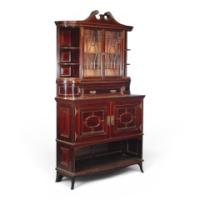
1 The Eaton Hall Rosewood Cabinet
Design firmly attributed to E.W.Godwin
Made by Collinson & Lock of London
c1878
£POA.
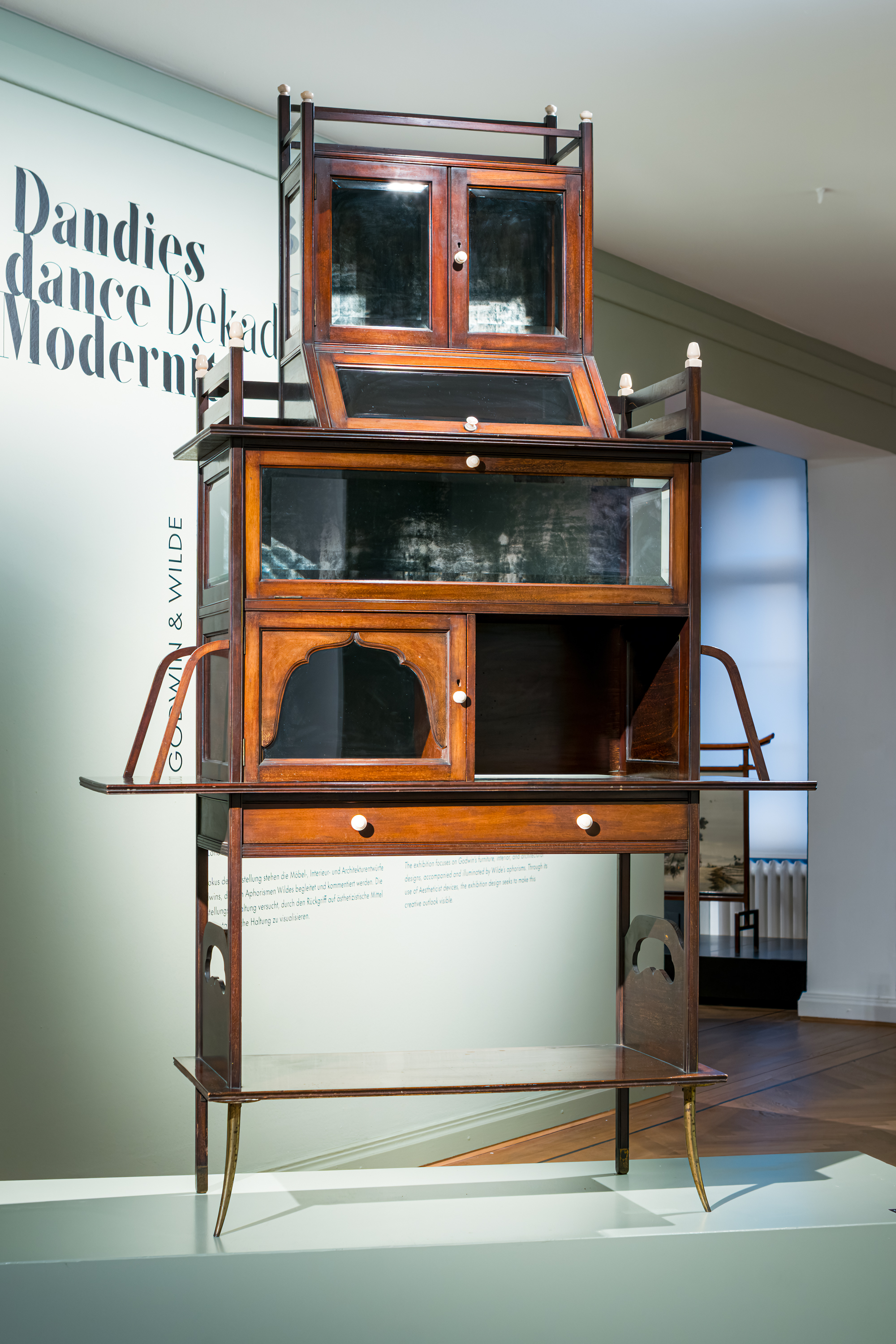
The scroll-carved broken arched Queen Anne pediment above a dentil and moulded frieze, with a pair of astragal glazed doors flanked by shelves beneath fielded panels, above a central drawer and semi-circular cupboards, the moulded top above a pair of panelled doors with an open panelled section beneath, on shaped splayed feet, Japanesque engraved brass handles, hinges and lockplates, stamped 'Collinson and Lock, London 7480', the handles, hinges and lockplates all stamped 'Elsleys, Gt Portland St, London', 225cm high, 128cm wide, 41cm deep
Provenance: Eaton Hall, Cheshire. A previous owner PURCHASED this lot from a sale of the contents at Sweetenhams of Chester, 20th and 21st May 1959, lot 283.
This piece has many features, which firmly show Godwin's hand at work, i.e. the Queen Anne broken pediment, (Susan Soros, 'Secular Furniture, Butterfly cabinet, p. 227; and a Queen Anne cabinet p. 269 and an 'over door', p. 251), the dentil moulding to the top is identical to the Butterfly cabinet, the astragal glazed doors and panelled lower doors identical to a design for a table for Grey Towers (Susan Soros, 'Secular Furniture', p. 157 and similar detail to the doors on two cabinets on pp. 222-223). The semi-circular central side doors and semi circular open shelves above are identical to a dressing table and a sketch for a dresser (Susan Soros, 'Secular Furniture', p. 211), a design for a mantle piece (Susan Soros, 'Secular Furniture', p. 248) and a design for a buffet (Susan Soros, 'Secular Furniture', p. 265). The integrated design of solids and voids in many of his cabinet designs and the framed back panels to each individual shelf and framed panels to each side is typical of his work. The splayed front feet are identical to the Four Seasons cabinet (Susan Soros, 'Secular Furniture', p. 217). The elongated handles with japanesque engraved back plates simulating Japanese WEAVED rush work (Susan Soros, 'E. W .Godwin Aesthetic Movement, Architect & designer', p. 303, fig. 11-10 and Susan Soros, 'Secular Furniture', p. 268) a detail he used in many combinations.
'Sheraton & Queen Anne in Japan at Eaton Hall' only Godwin could have designed this masterpiece. Possibly part of a larger commission as the Eaton Hall archivist also found a Collinson & Lock billiard table in the inventory at Eaton Hall. Godwin is known to have designed billiard tables for Collinson & Lock, as a design appears in a sketchbook on the 6th of October 1873, carved in the Jacobean style with circular decorations of white storks in relief interspersed with square panels. In a corresponding entry on the 7th of October 1873 it shows that he designed it for the Mclaren house, a large commission that Godwin did at Adison Rd, Kensington.
The third Marquis of Westminster, who later became the 2nd Duke of Westminster, commissioned Sir Alfred Waterhouse to substantially remodel and rebuild Eaton Hall. The work began in 1869 and reached its completion in 1883.The large drawing room can be seen in a photograph taken circa 1887, pl. 199 in Cooper, Jeremy 'Victorian & Edwardian Furniture and Interiors', in which Cooper mentions that the Duke had spent £600,000 on the decoration alone, and that Heaton, Butler & Bayne carried out the work. In 1885, an inventory of the contents of Eaton Hall was carried out, and it is precisely at this point in time that the cabinet receives its first mention. Having occupied a place in the Ormand Sitting Room, 72 on the ground floor of the North Wing of the Waterhouse Hall, the cabinet was described as, 'A Rosewood china cabinet with cupboards beneath and glass fronts at the top, 50ins.' The cabinet is then mentioned again in a 1917 inventory in the Angel Bedroom. The cabinet made its next appearance in 1931 in the 'Declaration of Trusts', which was a valuation of the contents of Eaton Hall, appearing as T86/27 in the Stewards Offices with a similar description, and then finally in the 1959 sale mentioned above. Sotheby's, and various other local auctioneers held many sales of the various contents of Eaton Hall from 1955 through to 1961 until the Hall was demolished in 1961.
225cm high, 128cm wide, 41cm deep
This description was compiled with the generous help and assistance of the Grosvenor Estate's Archive Department, Eaton Hall, Cheshire
Click on pictures for larger version |
|
GODWIN EX 2 -
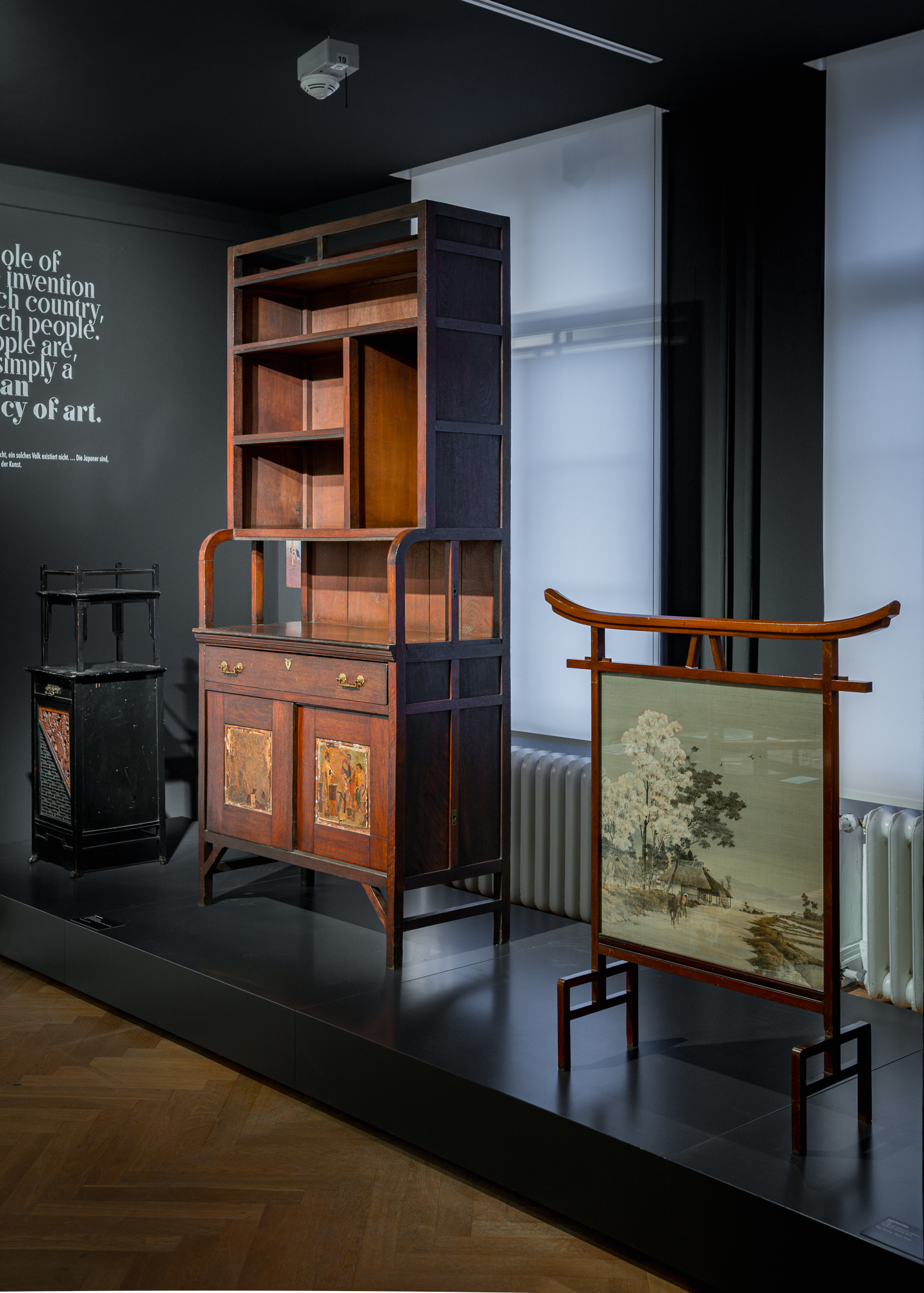
Edward William Godwin (1833-1886) for William Watt, a rare and important
Anglo-Japanese walnut bookcase, circa 1871, with brass handles and shield
style escutcheon, the lower cupboard with two sliding doors inset with painted
panels attributed to Henry Stacey Marks.
See Soros, Susan Weber 'The Secular Furniture of E.W. Godwin' Yale 1999, p.
201, plate 321, for an illustration of a related example. See also Christie's sale
'Important 20th Century Design' 26th May 2005, lot 47
In 1949 Dudley Harbron photographed and recorded a bookcase that he
concluded had been made for Dr. George Bird, a friend of Ellen Terry (See
Godwin's ledger for 17th September 1871) and the father of Elfrida Bird who
married Luke Ionides. That bookcase, now cut-down, together with another
corresponding example, was then in the possession of Mrs Lewis Clarke, having
been inherited from her grandfather, Alexander Ionides son of Elfrida and Luke.
A third bookcase was known to have been in the possession of Mrs Alecco
Ionides at about the same time (Soros, p.201).
Despite Harbron's research and evident interest in these bookcases, they were
poorly maintained by their owners, and two were thought to be destroyed (Soros,
p.201), whilst one of the examples had its shelved superstructure removed and
discarded. Susan Soros notes that this cut-down version is in 'stained oak' but
one can clearly see in her illustration (Soros, p.201), it is not made from polished
oak at all but exactly like the present example made from walnut. Both being made
from walnut and both having identical measurements to their bases gives even
more weight towards the most likely event that only one of the three cabinets was
completely destroyed and the cut-down version is quite likely to be one of the two
thought to have been destroyed, which it partially was. The present example is the only known example in existence to have emerged intact
and is therefore unique!
The painted panels to the cut-down 'Bird-Ionidies' example depict scenes from Greek antiquity. On the present version there is a painted
panel to one side probably by Henry Stacey Marks, the attribution made by Christie's Art department and Susan Weber Soros, and is in
good condition. The pencil and watercolour cartoon to the other panel, although quite faded and somewhat distressed, has the feel of
Edward Burne Jones's work and interestingly the panels were originally believed to be executed by Burne Jones although Harbron in 1949
maintains the panels were painted by Charles Glidden who died young at 20 years of age. This panel has been attributed to Henry Stacey
Marks by Christie’s art department. Henry Stacey Marks is well documented to have painted for Godwin, to whom the panel of the present
lot is attributed and which is also in the Greek style. The figures in the painted panel are of two men helping an injured man and possibly may
have been in combat with the knight in the other panel, and again their attire does also point to Greek Mythology. The opposite panel is quite
different and depicts a prince or knight about to kiss a maiden or a princess, she is looking into his eyes, reaching out and touching his arm
about to kiss. There is a sword lying at his feet and his own sword is held to his waist or in his belt with the blade in view and the point to the
earth, it looks as if there may be the tail of what could be a dragon adjacent to the sword and possibly a person that may have been slain
lying by the maiden. In the right-hand corner there is a castle with banner flying and a crescent moon beside it.
The Ionidies family were probably the biggest and most generous patrons of the Arts, building one of the most important and impressive
collections in the late Victorian Period, and refined collectors of Art from The Aesthetic Movement, Ionidies’s pool of artists to choose from
was thoroughly connected through his high society circle of friends which included Edward Calvert and George Frederick Watts, who
painted their family portrait when Luke was a child, James McNeill Whistler, Edward Poynter, George Du Maurier, Thomas Armstrong, Dante
Gabriel Rossetti and Edward Burne Jones. William Morris, Phillip Webb, Walter Crane and Thomas Jeckyll, all part of his circle of friends,
were commissioned to re-decorate 1 Holland Park, their family home, which is all well documented. Henry Stacey Marks (1829-1898) was
a painter, watercolorist and illustrator, who worked as a muralist and decorator for Burges, Godwin and Waterhouse. In 1869 Marks was
commissioned by Godwin to execute an allegorical frieze to the dining room of Dromore Castle, but due to the incurable dampness of
Dromore's enormously thick walls it never came to fruition.
An important point is that on the present example there are two brass lock plates to the right-hand side, one in the middle of the central
upright that runs through the middle of the bookcase side and another one in the middle of the same central upright but located in the
middle of the lower cupboard, these plates (one now missing) were used for joining two bookcases together and would have utilised a
brass thumbscrew (also now missing). The sides of this bookcase and the 'Bird-Ionides' bookcase are completely flat from top to bottom
which allows for them to butt up perfectly, a design detail that until now was unknown, and which gives even further strength to this
present version being one of the very original pair.
The present bookcase has a depository label to the back of Famine's, Colchester and handwritten 'G.M.LAWRENCE', Mrs G M Lawrence, was the last in possession of it in 2004. The Lawrence
family owned a very successful lemonade and ginger ale company with factories and warehouses in Beccles, Bungay and Halesworth,
Suffolk. It was removed from Mrs G M Lawrence’s house by Durrants auctioneers, one of the original houses that were built by the
Lawrences in Station Rd, Beccles. At some point in its life it made the journey down from London to Colchester and spent some time
there, although exactly where is unknown. It seems its next move would have been from Colchester to Beccles.
The measurements of the cut-down version are identical to the lower half of this version, in Soros, Susan Weber ‘The Secular Furniture of
E.W. Godwin’ the cut down version measures 35 1/4" high, which is the very same height to the open area of this present version, and
again the depth and width of both of these examples are identical 19" deep, 39" wide. The present version measures 89 1/2" high.
Circa 1871.
Height 85 1/2" 217cm, Width 39" 99cm, Depth 19" 49.5.
Click on pictures for larger version |
|
Godwin Ex 3
Edward William Godwin (1833-1886) for William Watt, a rare Anglo-Japanese armchair, with a pad centred open curved back, downswept arms and a re-upholstered seat The design for this armchair was illustrated in William Watts Art Furniture Catalogue (1877, plate 3), priced at ú3.10s.0d and a line drawing is illustrated in Soros, Susan Weber 'The Secular Furniture of E. W. Godwin', p. 113 pl. 138. One can see that this armchair has identical legs and tramline detailing which also follows the side chair identically, sold by Sotheby's with Paul Reeves 'The Best of British Design from the 19th and 20th Centuries: The Selling Exhibition', 14th-20th March 2008, see PR 33 for a comparable chair.
The last image is taken from Godwin's original sketch books held at the Victoria & Albert Museum.
£POA.
Click on pictures for larger version
|
GODWIN EX - 3a
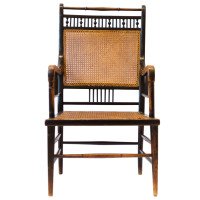
Anglo-Japanese armchair. Attributed to E.W. Godwin.
Probably made by William Watt.
£POA.
E.W. Godwin. (Attributed) An Anglo-Japanese armchair. Probably made by William Watt, the casters stamped 'Copes Patent'.
This armchair has the identical side stretchers as the front stretchers of his side chair made by W.Watt. (Illustration No 136.1-11.)
The frontice page from his catalogue of art furniture for W. Watt (Plate 1) has a built in cabinet in the left hand corner at the bottom of the stairs & has a cut-out in the door which is identical to the cut out below the arm, there is also a very similar cut out in his music Canterbury, made by W.Watt in 1876, (Illustration 338) & a design for a settee on page 119 (illustration 146) & a drawing of a settee by Godwin on page 39 (illustration 22), which shows the same cut-out again.
The tops of the rear uprights are similar to the tops on the famous bookcases he designed for the large corridor of Dromore Castle, (Illustration No 311.111) & the tops of a buffet & sideboard, (Illustration No 354 & 355), also a water colour of a hanging cabinet (Illustration No 354) which has similar cut-outs to the sides, & also made by William Watt. This armchair has a style intimately in common with his famous Anglo-Japanese sideboards.
All illustrations are taken from Soros, Susan Weber 'The Secular Furniture of E.W. Godwin',
Circa 1875.
Click on pictures for larger version |
|
GODWIN EX - 4.
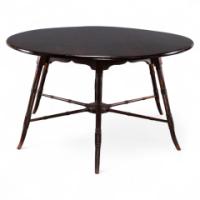
Anglo-Japanese rosewood table with 6 splayed legs ending with brass shoes.
Designed by Edward William Godwin.
There is a similar table illustrated in the William Watt catalogue of 1877 with radiating stretchers & splayed legs.
Circa 1877-80.
£SOLD.
Height 28", Width 36", Depth 36".
Click on pictures for larger version |
|
GODWIN EX - 5
An 8 leg Anglo-Japanese sideboard with brass shoes.
Designed by Edward William Godwin.
Made by Collinson & Lock.
£POA.
A superior design with much thought & consideration encompassing his Hygenic approach to furniture design & incorporating many similar details to his most famous Anglo Japanese cabinets. (See Susan Weber Soros The Secular Furniture of E W Godwin page 176 to 183). The 8 legs all with brass shoes typical to Godwin the way the back legs are designed an inch forward to compensate for skirting boards allowing it to fit tight against a wall with open shelves to the base & open shelves above breaking back to a 3 door display area to the top with adjustable shelf. The tramline scribed detail to the side & fronts of the legs & the cornice with dentil moulding is identicle to the famous Butterfly fireplace painted by James McNeil Whistler & exhibited in the Paris exhibition of 1878. See Soros p. 369
See also Christie’s, London ‘Important 20th Century Design’, 26th May 2005, Sale no.7130, lot 50
Circa 1870's.
Height 72" 182cm, Width 74" 193cm, Depth 18" 47cm.
Click on pictures for larger version |
|
GODWIN EX - 6
An Important & Extremely Rare Rosewood Anglo Japanese sidetable.
Designed by E.W. Godwin
Made by Collinson & Lock.
£SOLD.
Circa 1875.
Height 30", Length 43", Depth 24".
The last 5 images are from E.W.Godwin by Elizabeth Aslin (1st image of the 5) & The Secular Furniture of E W Godwin by Susan Weber Soros (last 4 images of the 5).
Ebonised versions of this table have been found in greater quantaties than Mahogany of Walnut & Rosewood versions are the rarest of the 4.
Click on pictures for larger version |
|
GODWIN EX - 7
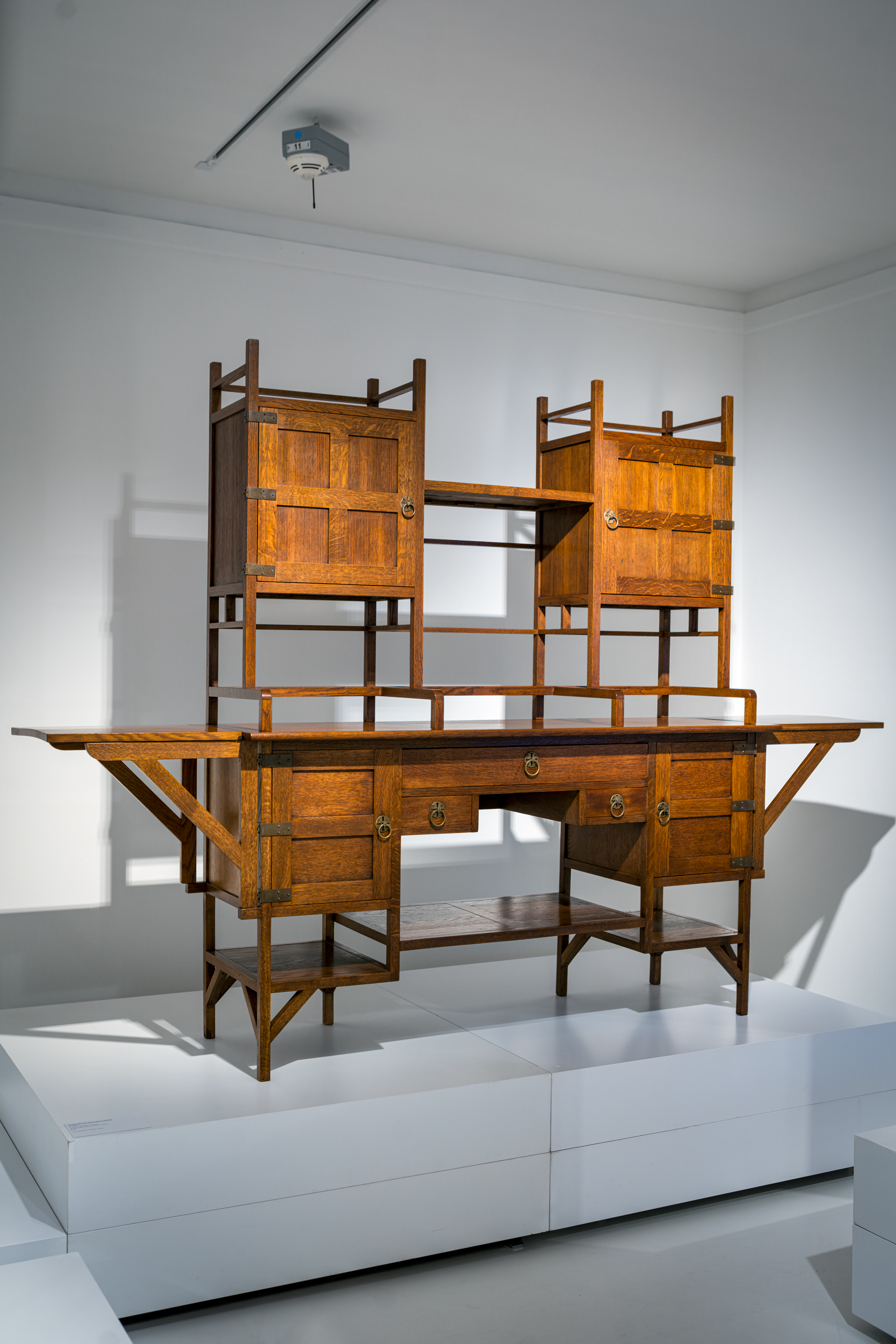
Edward William Godwin (1833-1886) for William Watt, an Anglo-Moorish walnut desk, with a later tooled red leather inset top, blind fret
frieze with two drawers, each end with a drawer, the tapered supports with shaped brackets, brass feet.
See sale Gardiner Houlgate ‘Antique Furniture Works of Art’ Wednesday 14th July 1999, lot 775, for this desk. Lot 773 in the same sale and from
the same property in Bath was an oak buffet and a walnut sideboard in the same Anglo-Moorish style both with William Watt, Grafton Street,
London labels See Soros, Susan Weber ‘The Secular Furniture of E.W. Godwin’, p.267 plate 8 from William Watt’s 1877 Art Furniture catalogue
under Anglo-Japanese Drawing Room Furniture. One can see that the overall form is the same style and has the same large drawer details to each
end and identical brass drop handles with curled ends and central disc detail. The legs with identical brass sabots to the feet to the one in the
William Watt catalogue of 1877. The spacing of the storage shelves are also the same, although it does not have the same work area overhang it is
undoubtedly a variation of the same theme
See Soros, Susan Weber ‘The Secular Furniture of E.W. Godwin’, p.267 plate 8 from William Watt’s 1877 Art Furniture catalogue under Anglo-
Japanese Drawing Room Furniture, one can clearly see that this desk has the same form with deep central drawer to each side, brass sabots and
identical distinctive drop handle
£POA.
Circa 1875.
Height 30" 76cm, Width 43" 101cm, Depth 24" 63cm.
Click on pictures for larger version |
|
GODWIN EX - 8
Anglo-Japanese Gong.
Designed by E.W. Godwin.
Possibly made by William Watt. See Christie’s, London ‘Important 20th Century Design’, 26th May 2005, Sale no. 7130, lot 52 for an
identical gong
Circa 1870's.
£POA.
Height 29", Width 23", Depth 9 1/2".
Click on pictures for larger version |
|
GODWIN EX - 8a
Anglo-Japanese Gong & striking stick.
Designed by E.W. Godwin.
Possibly made by William Watt. See Christie’s, London ‘Important 20th Century Design’, 26th May 2005, Sale no. 7130, lot 52 for an
identical gong
Circa 1870's.
£SOLD.
Height 31", Width 26", Depth 11".
Click on pictures for larger version |
|
Godwin EX 9
Edward William Godwin (1833-1886), an Anglo-Japanese oak cheval mirror, 156cm high, 66cm wide. En suite with the last lot, this cheval has the identical sledge feet to the above gong with one Anglo-Japanese upper support.
£POA.
Click on pictures for larger version
|
GODWIN EX - 10
Left Image.
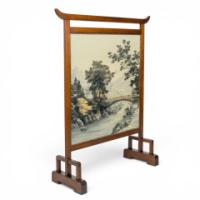
Edward William Godwin, an Anglo-
Japanese walnut firescreen, with a
‘Pagoda’ style top and a silk Japanese
country scene to the front, the reverse with
a worn silk backing with a peacock within
a circle, 109cm high, 92cm wide
The peacock within a circle follow the
designs, with spikey plumes to the head
and wings displayed within the restraints of
the circle, particularly the peacock designs
he did for Jeffrey & Co., which were also in
a circle. The kissing birds, amongst others,
from a selection of drawings of Japanese
crests designed by Godwin in about 1870
held at the Victoria & Albert Museum
See Azlin, Elizabeth ‘E. W. Godwin:
Furniture & Interior Decoration’ London
1986, p. 90, illus. 75 (second to last crest
right hand bottom).
Height 43" 109cm, Length 36" 92cm, Depth of feet 10 1/2". Circa 1905. £POA.
Right hand image. Godwin Ebonised firescreen, see below.
Click on pictures for larger version |
|
GODWIN EX - 10a
Anglo-Japanese firescreen
Designed by E.W.Godwin.
Possibly made by William Watt.
With a silk Japanese boating scene.
Circa 1870's.
£SOLD.
Height 32", Width 30", Depth 10 1/2".
Click on pictures for larger version |
|
GODWIN EX - 11
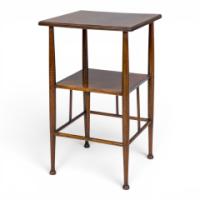
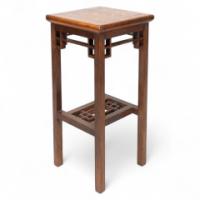
Edward William Godwin (1833-1886), a rare & Important Anglo-Japanese two tier Rosewood sidetable designed by E W Godwin & made by William Watt. The square top with full length shaped supports below uniting the table top to the 4 offset square splayed legs each with incised line details above the lower shelf, with 4 sets of twin stretchers with a single upright support joining each stretcher & joining the lower tier.
A drawing in Godwin’s sketchbooks for a version of this table annotated ‘Done Watt Dec 14 76’ was registered with the Public Record
Office in November 1876 by the firm William Watt as ornamental design no. 306237
See Soros, Susan Weber, ‘The Secular Furniture of E.W. Godwin’, p. 160, fig. 226 for A mahogany version. The present example appears to be the first rosewood example to appear on the market.
The last image (coming soon) is from The Secular Furniture of E W Godwin by Susan Weber Soros.
Height 22 1/2" 67cm. Length of the top 22" 56cm, Width of the top 21 1/2 57cm".
Circa Late 1870's.
£POA.
Click on pictures for larger version |
|
GODWIN EX - 12.
Edward William Godwin (attributed), an Anglo-Japanese ebonised side chair, circa 1875,
probably by William Watt, with a lattice back, a later overstuffed leather seat, on square part-fluted
supports.
See Soros, Susan Weber ‘The Secular Furniture of E.W. Godwin’, p. 113, illus. 137 for a comparable
example. See also Sotheby’s with Paul Reeves ‘The Best of British Design from the 19th and 20th
Centuries: The Selling Exhibition’, 14th-20th March 2008, PR33 for a comparable chair
height 74.5cm. Circa 1870's.
£POA.
Click on pictures for larger version |
|
GODWIN EX - 13.
Edward William Godwin (attributed), an Anglo-Japanese ebonised side chair, circa 1875,
probably by William Watt, with a lattice back, a later overstuffed leather seat, on square part-fluted
supports.
See Soros, Susan Weber ‘The Secular Furniture of E.W. Godwin’, p. 113, illus. 137 for a comparable
example. See also Sotheby’s with Paul Reeves ‘The Best of British Design from the 19th and 20th
Centuries: The Selling Exhibition’, 14th-20th March 2008, PR33 for a comparable chair
height 74.5cm. Circa 1870's.
£POA.
Click on pictures for larger version |
|
GODWIN EX - 14.
Edward William Godwin (attributed), an Anglo-Japanese ebonised side chair, circa 1875,
probably by William Watt, with a lattice back, a later overstuffed leather seat, on square part-fluted
supports.
See Soros, Susan Weber ‘The Secular Furniture of E.W. Godwin’, p. 113, illus. 137 for a comparable
example. See also Sotheby’s with Paul Reeves ‘The Best of British Design from the 19th and 20th
Centuries: The Selling Exhibition’, 14th-20th March 2008, PR33 for a comparable chair
height 74.5cm. Circa 1870's.
£POA.
Click on pictures for larger version |
|
GODWIN EX - 15.
Edward William Godwin (attributed), an Anglo-Japanese ebonised side chair, circa 1875,
probably by William Watt, with angular back details a variation on the theme, with a later overstuffed leather seat, on square part-fluted
supports.
See Soros, Susan Weber ‘The Secular Furniture of E.W. Godwin’, p. 113, illus. 137 for a comparable
example. See also Sotheby’s with Paul Reeves ‘The Best of British Design from the 19th and 20th
Centuries: The Selling Exhibition’, 14th-20th March 2008, PR33 for a comparable chair
height 74.5cm. Circa 1870's.
£POA.
Click on pictures for larger version |
|
GODWIN EX - 16.
Edward William Godwin (attributed), an Anglo-Japanese ebonised arm chair, circa 1875,
probably by William Watt, with a lattice back, a later overstuffed leather seat, on rig turned front legs
See Soros, Susan Weber ‘The Secular Furniture of E.W. Godwin’, p. 113, illus. 137 for a comparable
example. See also Sotheby’s with Paul Reeves ‘The Best of British Design from the 19th and 20th
Centuries: The Selling Exhibition’, 14th-20th March 2008, PR33 for a comparable chair
height 72cm. Circa 1870's.
£POA.
I have had some printing blocks made to the original design that E W Godwin did for embossing leather coverings for Dromore Castle in Limerick. Ireland. Which I have used on this chair giving it an original period look. This is the 2nd one of these chairs I have found in 20 years of searching.
Click on pictures for larger version |
|
GODWIN EX - 17
Edward William Godwin (1833-1886) for William Watt, A rare & important Old English or Jacobean ebonised curved back elbow chair, on tapered
supports with X-stretchers.
This armchair manufactured by William Watt is a unique example one I have never come across before, or seen anywhere, in regard to the cane seat which is unusual in as much as the cane wraps around the seat & still retains it's original inner hoop used to hold the cane where the back meets the seat & where the arms meet the seat & is no doubt a very early version & to Godwin's preferred seating choice 'in cane' & once re-caned will also have a much cleaner line to the whole design.
Godwin was the first designer to incorporate hygiene within the design of furniture & wrote many articles pertaining to this. In Susan Soros page 53 & 54 headed, 'The Sanitary Approach To Furniture Design' on page 53 it states that ,'This concern for domestic hygiene was a frequent theme in his writings & in an article on the furnishing of his own house in London he asserted that ''cleanliness...I take to be the first consideration in all domestic design.'' Godwin had a phobia for dust & dirt & on page 54 it notes that he designed a great many chairs in numerous styles with cane seats whose flat surfaces would not harbour dust or germs & could easily be cleaned, & goes on to say that, '' In addition, his popular Jacobean or Old English chairs first designed in 1867 had cane seats.
See Soros, Susan Weber ‘The Secular Furniture of E.W. Godwin’ for similar chair with high stretchers.
See also Sotheby’s with Paul Reeves ‘The Best of British Design from the 19th & 20th Centuries: The Selling Exhibition’, London 14th-20th March 2008, p. 53
Height 86cm. Circa 1867.
£POA.
Click on pictures for larger version |
.
|
GODWIN EX - 17a
Edward William Godwin (1833-1886) for William Watt, an Old English or Jacobean
ebonised curved back elbow chair, with a re-upholstered leather seat, on tapered
supports with X-stretchers.
See Soros, Susan Weber ‘The Secular Furniture of E.W. Godwin’ for similar chair with high
stretchers. See also Sotheby’s with Paul Reeves ‘The Best of British Design from the 19th
and 20th Centuries: The Selling Exhibition’, London 14th-20th March 2008, p. 53
Height 86cm. Circa 1875.
£POA.
Click on pictures for larger version |
|
GODWIN EX - 18
Jacobean or Old English office swivel Armchair.
Design by E.W.Godwin.
Probably made by William Watt.
With it's original drop in rush seat, very few of this type of office chair would have been made in comparison to the armchairs, there are only a few known to exist.
Circa 1870's.
£POA.
Click on pictures for larger version |
|
GODWIN EX - 19
Edward William Godwin (1833-1886) for William Watt, an Anglo-
Japanese beech and caned armchair.
An identical armchair with a William Watt label was purchased by Tony
Geering & Martin Wolfson from the Auctioneers Warren & Wignall, Leyland
approximately six years ago, now in a private collection
Height 92cm. Circa 1870's.
£POA.
Click on pictures for larger version |
|
GODWIN EX - 20.
106
Edward William Godwin (attributed) for
William A. & S. Smee, an Anglo-
Japanese walnut spindle back
armchair, with a re-upholstered yellow
leather seat, metal label,
Godwin designed for W.A. & S. Smee,
89 Finsbury Pavement, London and his
designs were exhibited by them at the
Furniture Trades Exhibition in 1883
See Azlin, Elizabeth ‘E.W. Godwin’,
London: John Murray, p. 22
The front legs and stretcher are almost
identical to the previous lot and the cloud
shape detail to the top is comparable to
both chairs in Soros, p.112 (original metal label)
Height 87cm. Circa 1880.
£POA.
Click on pictures for larger version |
|
GODWIN EX - 21.
Edward William Godwin (attributed) for
William A. & S. Smee, an Anglo-
Japanese walnut spindle back
armchair, with a re-rushed seat,
Godwin designed for W.A. & S. Smee,
89 Finsbury Pavement, London and his
designs were exhibited by them at the
Furniture Trades Exhibition in 1883
See Azlin, Elizabeth ‘E.W. Godwin’,
London: John Murray, p. 22
The cloud
shape detail to the top is comparable to
both chairs in Soros, p.112 (original metal label)
Height 87cm. Circa 1880.
£POA.
Click on pictures for larger version |
|
GODWIN EX - 22
Edward William Godwin (attributed) probably for William Watt, an Anglo-Japanese ebonised armchair,
with a re-upholstered leather seat and back, the casters stamped ‘Copes Patent’.
The lattice work on this armchair is similar to a couch on p. 106, illus. 127 and to a sofa, p. 109, illus. 130 and a
design for a settle p. 119, illus. 146 all in Soros, Susan Weber ‘The Secular Furniture of E.W. Godwin’
Circa 1875.
£POA.
Click on pictures for larger version |
|
GODWIN EX - 23
Edward William Godwin (1833-
1886) for William Watt, a set of
four Anglo-Japanese ebonised
rush seated chairs
See Soros, Susan Weber ‘The
Secular Furniture of E.W. Godwin’,
p. 125, illus. 168
Circa 1877-80.
£POA.
Click on pictures for larger version |
|
GODWIN EX - 24
An Anglo-Japanese ebonised display cabinet.
Attributed to Edward William Godwin.
Made by William Watt.
This is the actual cabinet that is illustrated in The Secular Furniture of E.W.Godwin on page 214 fig 341. If you look carefully at the illustration one can see a little damage to the left hand corner just where the top meets the main body there is a little white mark in the photograph which is on this cabinet (picture 9) also there is a slight split to the right hand side just below the carved half Chrysanthemum which is also on this cabinet (picture 9) & the front right hand leg has a chip off the front again also on this cabinet (picture 10 & 11) proving that this is the actual cabinet which was photographed in 1973 & as stated in the book where abouts unknown. I discovered this piece in 2003.
Circa 1870's.
Height 56", Width 32", Depth 14 1/2".
£POA.
Click on pictures for larger version |
 |
GODWIN EX - 25
(attributed), an Aesthetic
Movement ebonised and
needlework three-fold screen,
possibly by Collinson & ‘Lock’,
worked in colours with birds amidst
foliage.
Circa 1870's.
Height 62" 164cm, Width of each part 33" 57.5cm, Width fully open 99", Thickness 1 1/4".
£POA.
Click on pictures for larger version |
|
GODWIN EX - 26
Edward William Godwin (attributed), a
mahogany four-fold screen, bevel glazed,
with woven silk and velvet panels, 136cm high,
each fold 52cm wide
This incorporates many design details of
Godwin’s Anglo-Japanese works. The woven,
silk and velvet panels as in the Godwin
firescreen, lot 96
See also Christie’s sale ‘Important 20th Century
Design’. 26th May 2005, lot 51 for another
Godwin firescreen
Circa 1870's.
Height 53", Width of each part 20 1/2", Width fully open 82", Thickness 1" .
£POA.
Click on pictures for larger version |
|
GODWIN EX - 27
Anglo Japanese ebonised purdonium
Attributed to E.W.Godwin or possible W.E.Nesfield.
Probably made by William Watt.
The square sectioned gallery top and moulded shelf supported on fine angle brackets and square section uprights, the lower part with a moulded top above a cupboard with a fretted brass pull that has an engraved floret to the central lozenge typical to Godwins handles, the central panel with carving and oriental fretwork with embossed Anglo-Japanese style leather or paper behind, the whole on tapered legs united by stretchers on gilt metal and porcelain castors.
This purdonium shows similarities to a
four-fold screen made for Richard Norman Shaw
as a wedding present which is attributed to
W.E. Nesfield. See Cooper, Jeremy ‘Victorian & Edwardian
Furniture & Interiors, p. 146, illus. 361
Circa 1870's.
Height 43" 110cm, Width 16" 40cm, Depth 15" 38cm.
£POA.
Click on pictures for larger version |
|
GODWIN EX - 28
Edward William Godwin (attributed), a rare & important Anglo-Japanese golden oak sidetable with mid level drawer a shelf under, probably made by William Watt or Liberty & Co. See Susan Weber Soros. The Secular Furniture of E.W.Godwin page 146.
£POA.
Circa 1870.
Height 30 1/2" 77cm, Width 18 1/4" 46cm, Depth 12" 33cm, Hieght of middle shelf 21", Height of lower shelf 3 1/2.
Click on pictures for larger version |
|
GODWIN EX - 29
Edward William Godwin (attributed), a set of six simulated rosewood and caned dining chairs, 87cm high (two without the cane) See Soros, Susan Weber 'The Secular Furniture of E.W. Godwin', p. 102, illus. 122. Chairs similar to this were known to be in the possession of both Godwin himself and Ellen Terry.
£2750.
Click on pictures for larger version
|
GODWIN EX SOLD.
An highly important Anglo-Japanese sidetable designed by E.W.Godwin. This table is made exactly to Godwin's original design from his own sketchpads held at the Victoria & Albert Museum. Godwin was without question the leading exponent of the Anglo-Japanese Movement, & this side table is the most important side table he ever designed. Godwin captured the whole ethos of Japanese furniture design, form & function, his disbandment of clumsy or over ornate detailing & his lean toward line & form in a purely Japanese style although he never actually visited Japan, & drew part of his inspiration from two volumes of Hokusai's Manga, a collection of sketches on Japanese life, from which he gained his knowledge of Japanese wood construction & carefully studying original pieces on display at museums. At the same time he couldn't have failed to have been aware of the massive influx of Japanese items that were pouring in from the boats docking in Bristol from the far East in the 1850's & 60's.
There are two other tables of the same design, both with metal adorments & metal sabots, one of which is in The Modern Museum of New York & one in the Ellen Terry museum in Smally Hythe Kent. Circa 1872.
Made by Collinson & Lock.
£SOLD.
Click on pictures for larger version |
GODWIN EX SOLD. - A very important single occasional sidetable designed by E.W. Godwin in Circa 1867 & made by William Watt these were produced in the late 1860's & through the 1870's. This occasional table was originally designed for his own use when he moved from Bristol to London & in the forward to the William Watt catalogue he complains about how this sidetable had been Plagiarized by other companies which we can all to often see on the market today inferior copies lacking quality & presence that his incrediable design power created see the secular furniture of E.W. Godwin by Susan Weber Soros page 143. £SOLD.
Click on pictures for larger version |
|
GODWIN EX SOLD.
Edward William Godwin (attributed), an Anglo-Japanese ebonised chaise longue, with later part gilt tooled leather upholstery,
turned supports and spindles, with casters.
A design for a chaise longue is illustrated in William Watt's Art Furniture Catalogue (1877, plate 3), priced at £3.10s.0d. The overall form is
remarkably similar in many ways, the angular form to one end and in particular the carved rosette to the chaise head rest and the turned
bulbous detail to the right-hand end of the back rest. The square section and turned spindle details are also used by Godwin on many
other pieces, particularly on the Florence cabinet. See Soros, Susan Weber 'The Secular Furniture of E. W. Godwin', p. 185, illus. 306; a
nursery buffet, p. 194 illus. 314; an ebonised armchair made by James Peddle, p. 132, illus. 179; a drawing room cabinet, p. 209, illus.
333; and on another chaise longue, p. 106, illus. 127. The latter also has very similar legs and a similar angular form to one end, which he
has used again on both ends of a settee, p. 109, illus. 130
Height 27" 69cm, Length 66" 171cm, Depth 24 1/2". Circa 1870's.
£SOLD.
Click on pictures for larger version |
|
|
GODWIN EX SOLD.
An Anglo Japanese Rosewood table.
Design attributed to E.W.Godwin
Probably made by Collinson & Lock
The reeded top above a Japanesque fretwork frieze on four bowed end supports, with a reeded and stepped centre lower shelf flanked by a Japanesque fretwork under tier.
This table shows inspiration from both Japanese & Chinese designs, Chinese hardwood furniture played a crucial role in Godwin’s Anglo Japanese designs & he is known to have owned Chinese furniture as well as Chinese accessories (Susan Soros, Secular Furniture, page 44-48)
The bowed legs are very reminiscent of two designs from tables in a sketchbook from 1876 and 1881 (Elizabeth Aslin, E.W.Godwin page 79) and again on a design for 3 cabinets in c1878 and c1885 (Susan Soros, Secular Furniture, pages 218 &236).
The complicated fretwork is reminiscent of a design for a sofa by Collinson & Lock (Susan Soros, Secular Furniture, page 109) a table in 1873-75 (Susan Soros, Secular Furniture, pages 157) and an armchair the design attributed to Godwin for James Peddle in 1881 (Susan Soros, Secular Furniture, pages 132).
The reeded detail is identical to a chair design in William Watts Art Furniture Catalogue c1885 (Susan Soros, Secular Furniture, pages 266) a chair attributed to Godwin c1875 (Susan Soros, Secular Furniture, page 137) and a couch attributed to Godwin and made by Collinson & Lock c1872-75 (Susan Soros, Secular Furniture, page 106). Godwin also incorporates the stepped lower shelf in many designs.
Circa 1870's.
£SOLD.
33 in.(84cm.) wide; 27¾ in.(70.5cm.) high; 19¾in.(50cm.) deep
Click on pictures for larger version |
|
GODWIN EX SOLD. - A rare trestle table designed by E.W.Godwin & made by Green & King designed for Northampton Town Hall one of his greatest Gothic Revival building designs. Circa 1865. £SOLD. |
Click on pictures for larger version
|
GODWIN EX SOLD.
8 leg Ebonised desk with a Macassar Ebony top.
Designed by E.W.Godwin.
Made by Collinson & Lock.
Circa 1875.
£SOLD.
Height 29 3/4", Width 41 1/4", Depth 21".
Click on pictures for larger version |
|
GODWIN EX SOLD.
Anglo Japanese Armchairs.
Attributed to E.W.Godwin.
Probably made by William Watt.
Last image from Susan Soros. The Secular Furniture of E.W.Godwin page 128.
Circa 1870's.
£SOLD.
Height 43", Width 16", Depth 15".
Click on pictures for larger version |
|
Return to Current Stock
Return to Index
Puritan Values Ltd, The Dome, St Edmunds Rd, Southwold, Suffolk, IP18 6BZ
Tel: Tony 07966 371676 OR Stan 07759 616400
Credit & Debit Card Facilities & Interest Free Credit now available
E-Mail:sales@puritanvalues.com