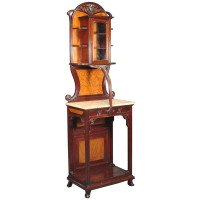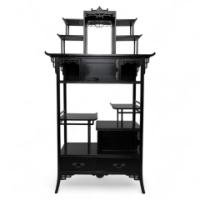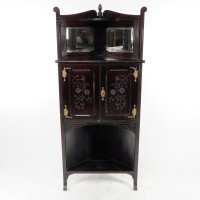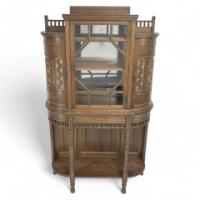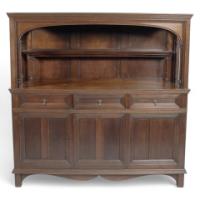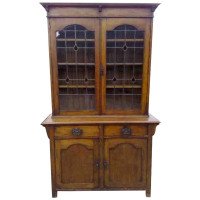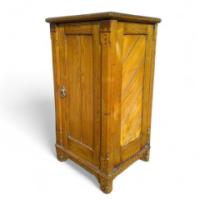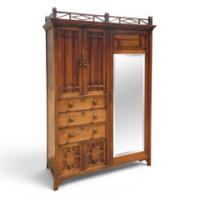
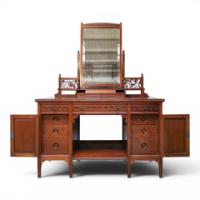
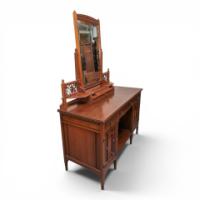
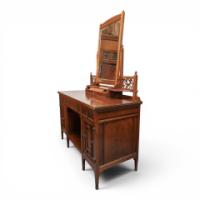
E. W. Godwin Attributed, Aesthetic Movement Walnut Dressing Table with Mirror
Price on Application
This item is price on application due to its rarity and importance.
Width: 52.01 in (132.1 cm)
Depth: 18.15 in (46.1 cm)
1880-1889
About this piece
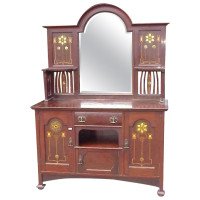
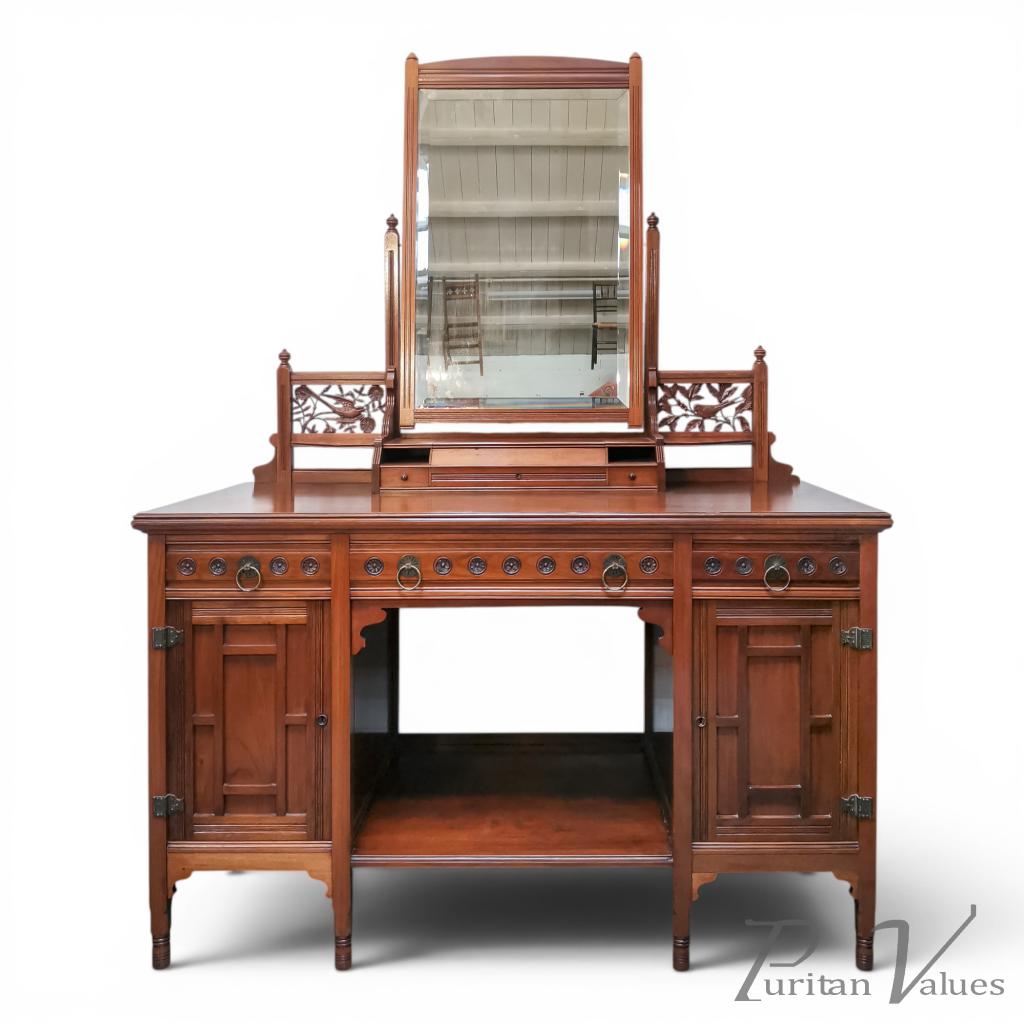
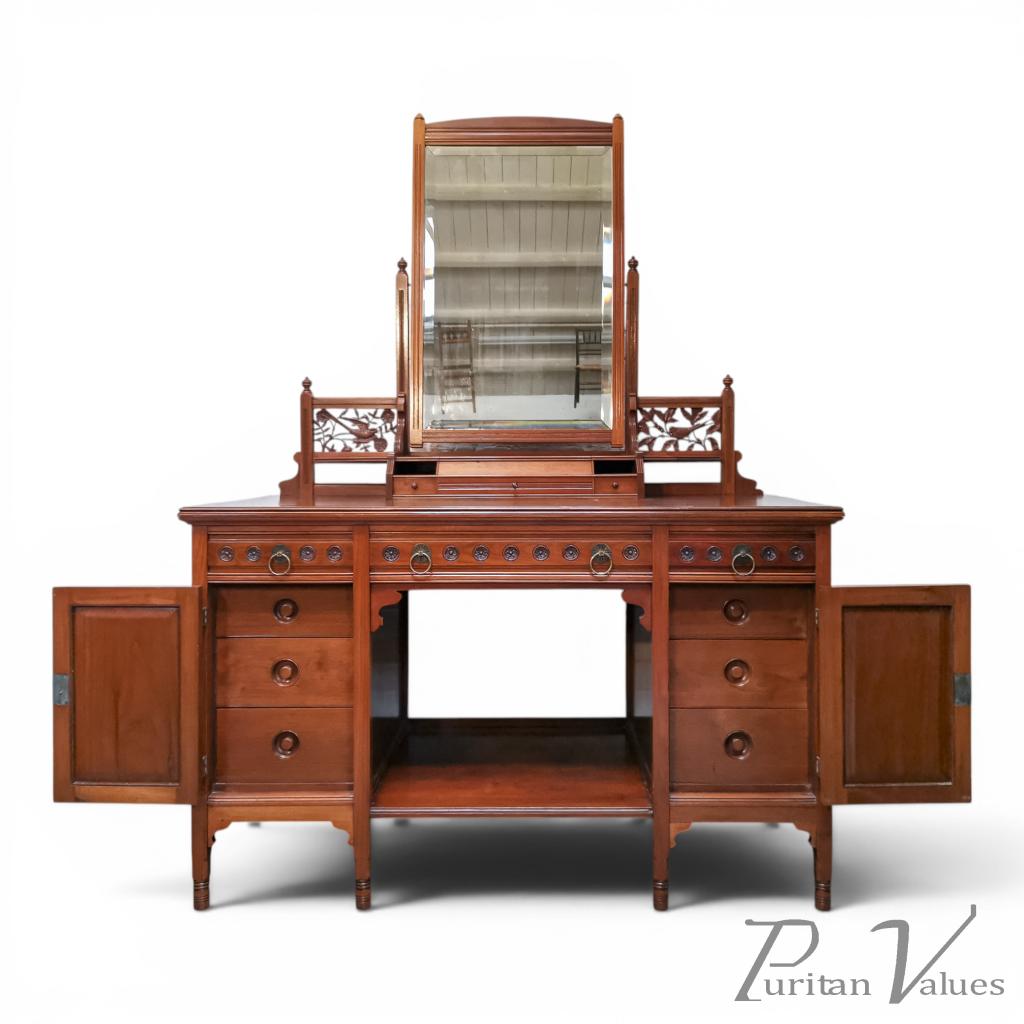
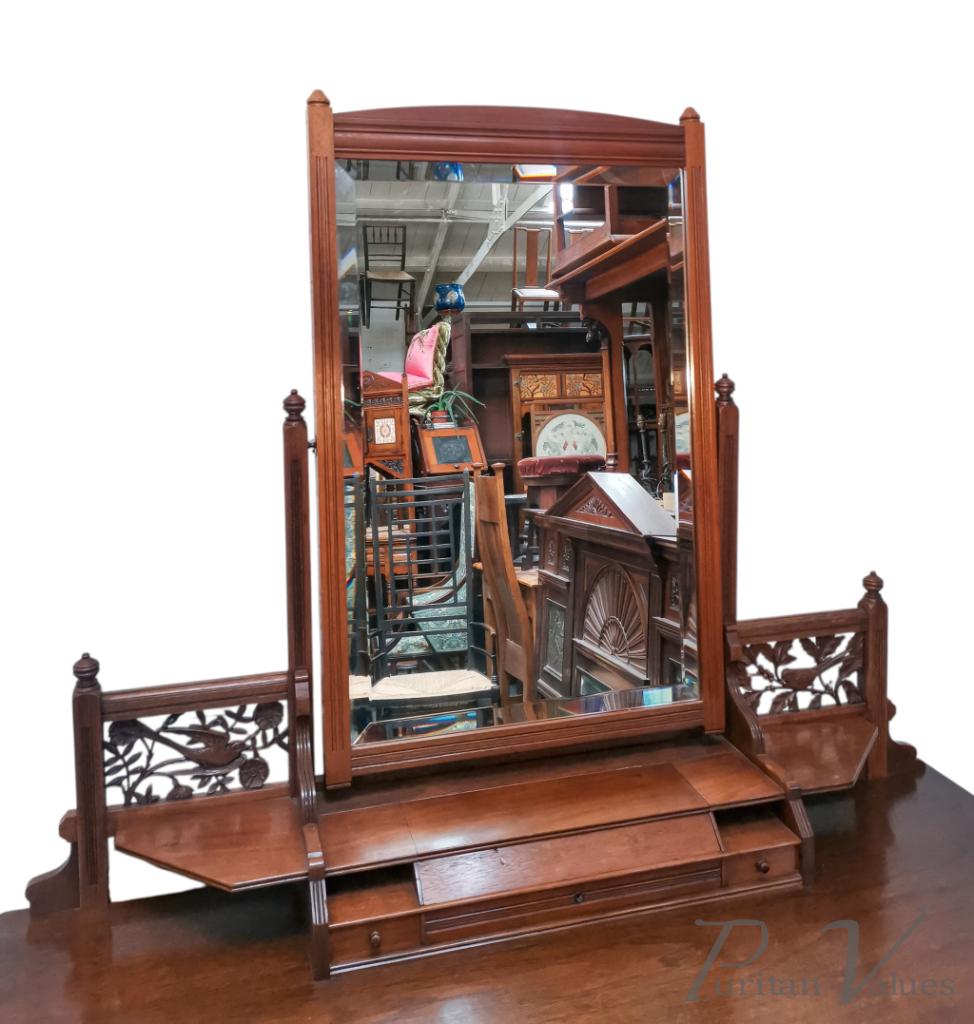
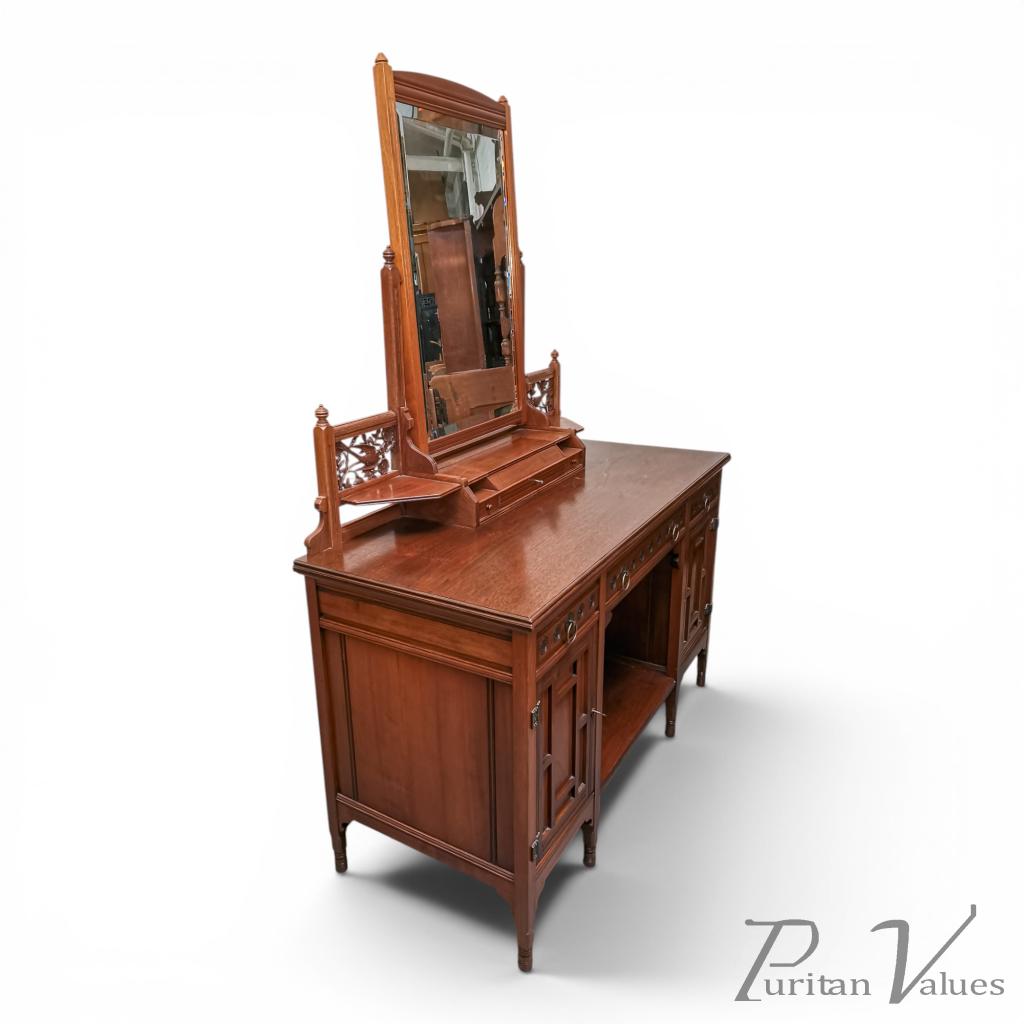
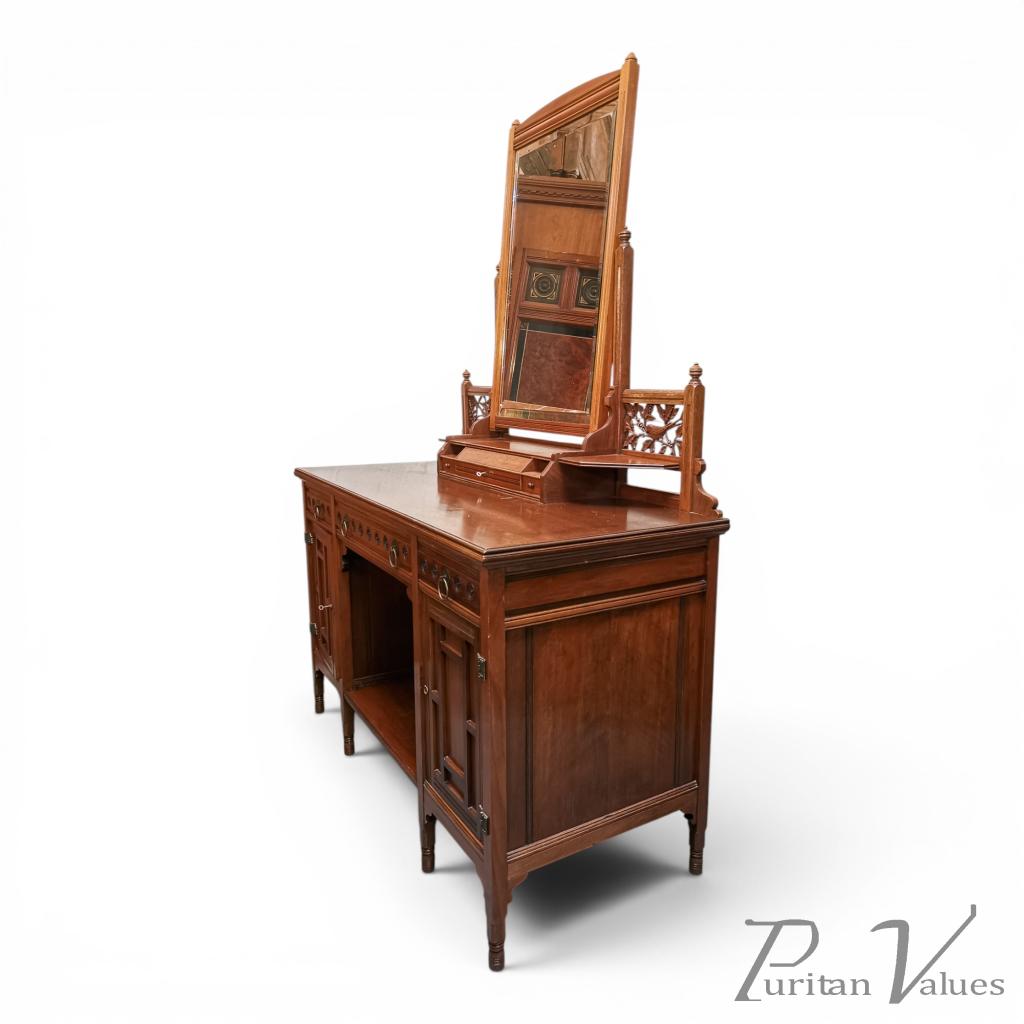
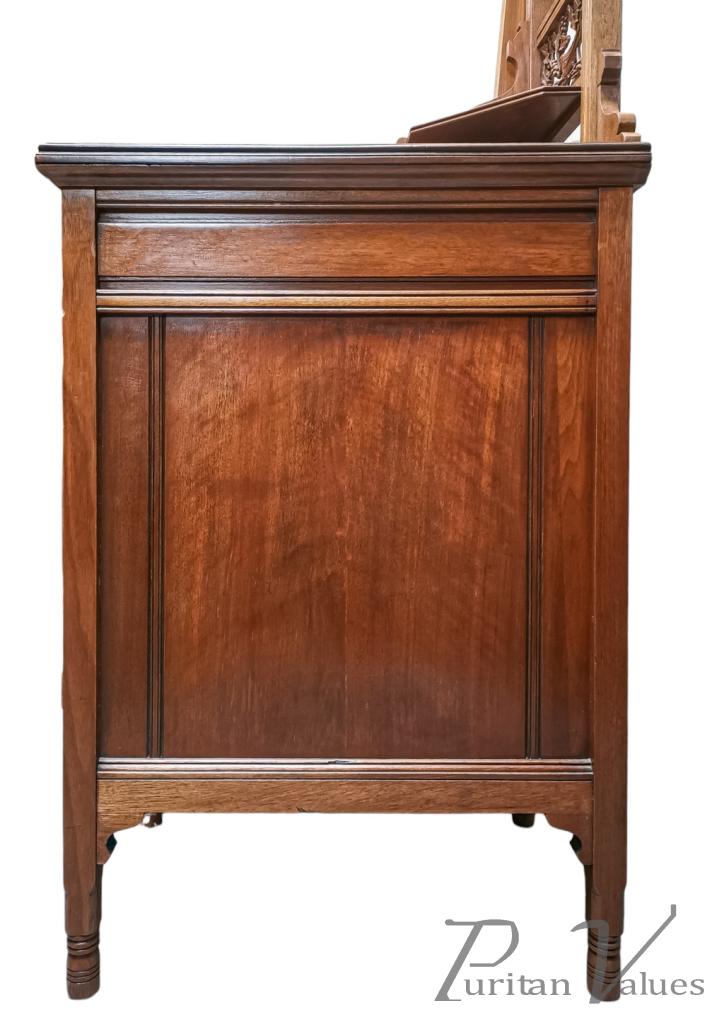
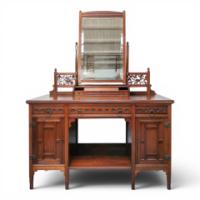
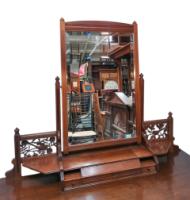
Attributed to E. W. Godwin, maker unknown, this walnut dressing table aligned with the Aesthetic Movement (circa 1860 to circa 1890), c.1880. The upper section has a tall swivel mirror set between upright supports with differing finials, raised above an angular storage section with a lift-up lid, two small drawers to either side and open storage voids above.
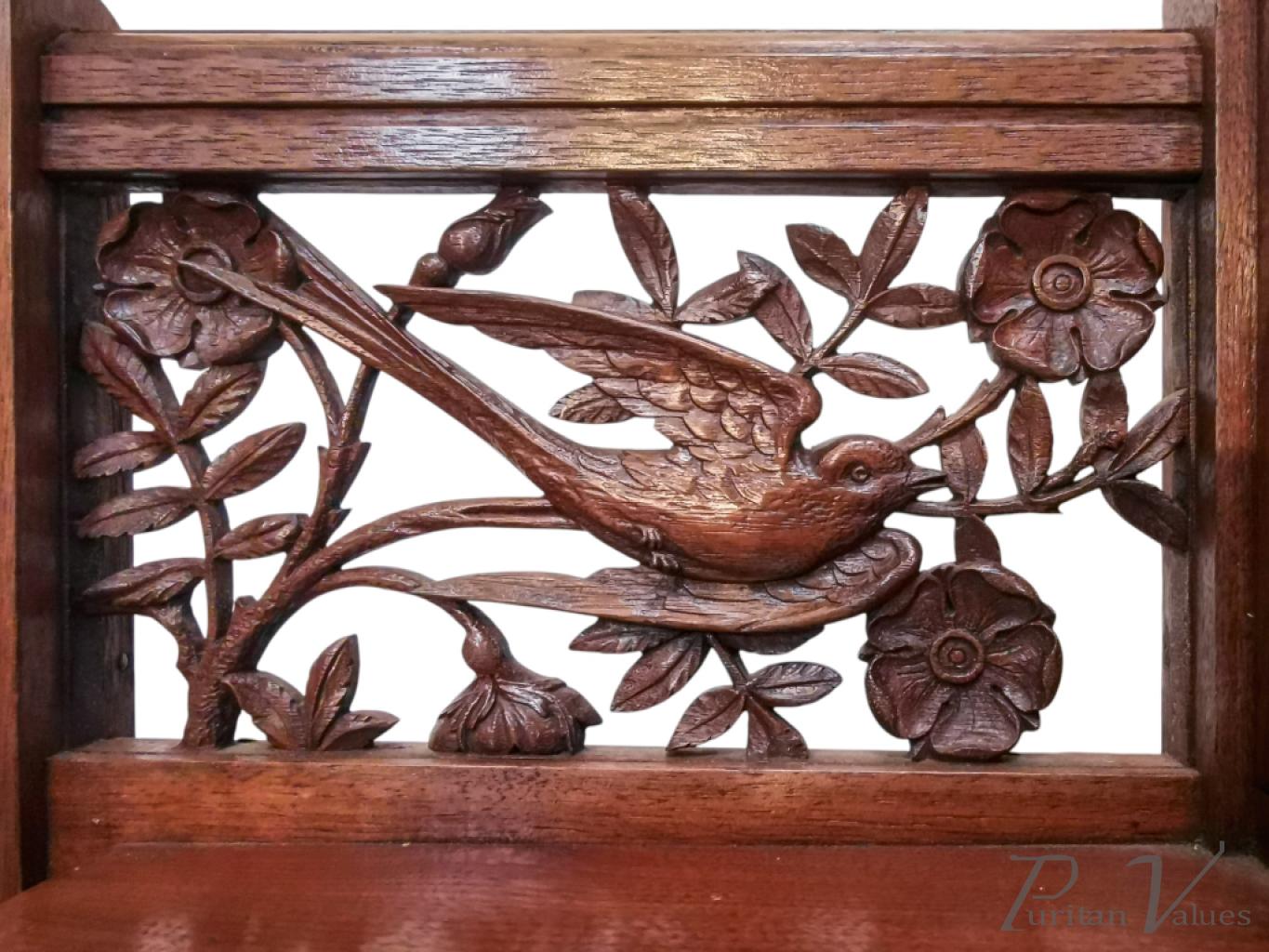
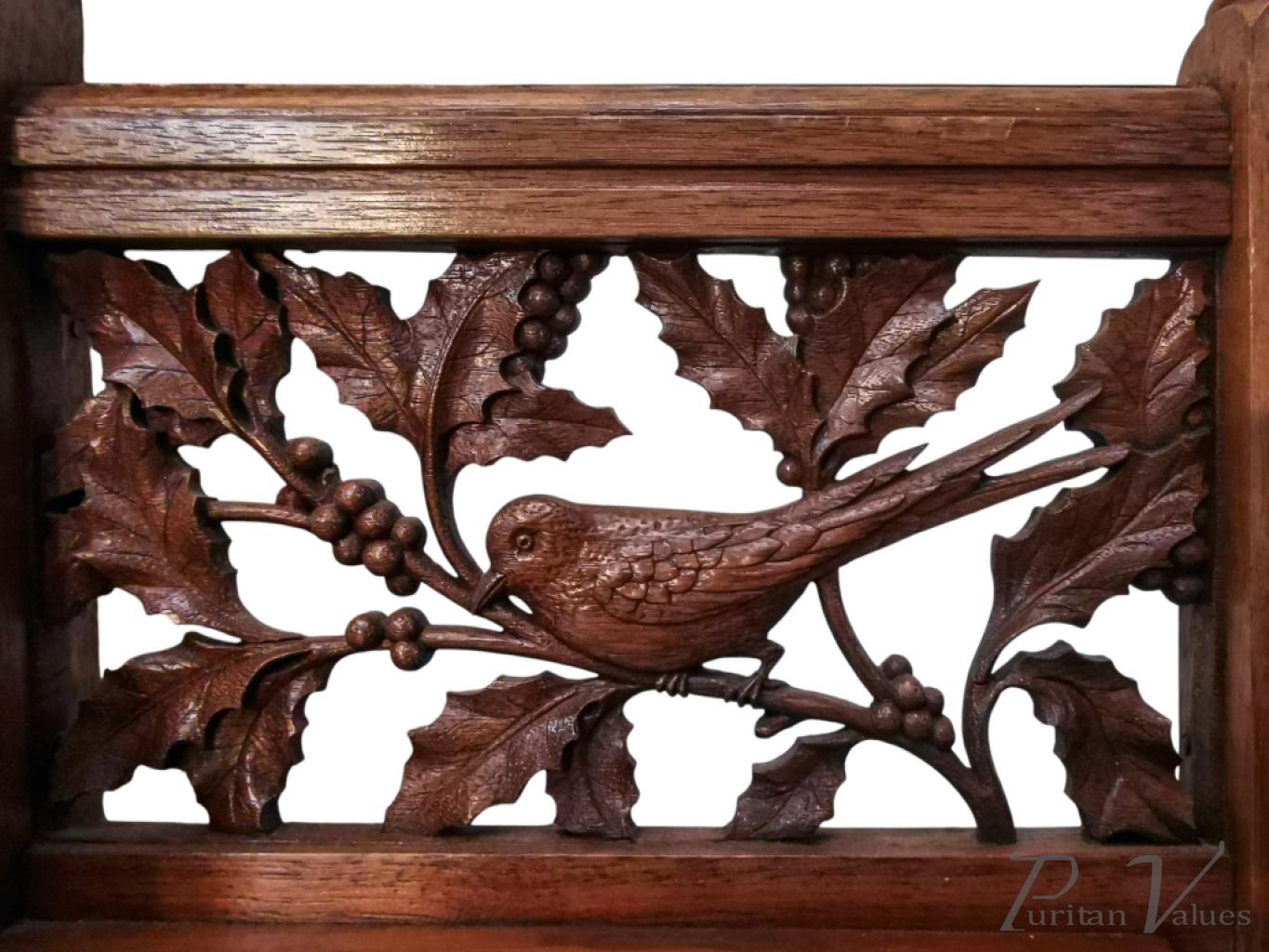
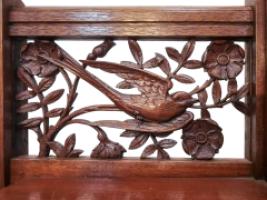
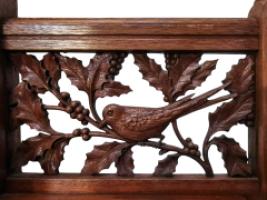
The mirror section is flanked by carved decorative panels, with a robin perched on Christmas holly to the right and a swift amongst foliage to the left. There is an almost identical drawing of a swift in Godwin’s sketchbooks held in the Victoria and Albert Museum, which will be added to this description when available. The side shelves below the carved panels give the upper structure a useful dressing table function, while the open carving gives the whole piece a lighter, more decorative Aesthetic character.
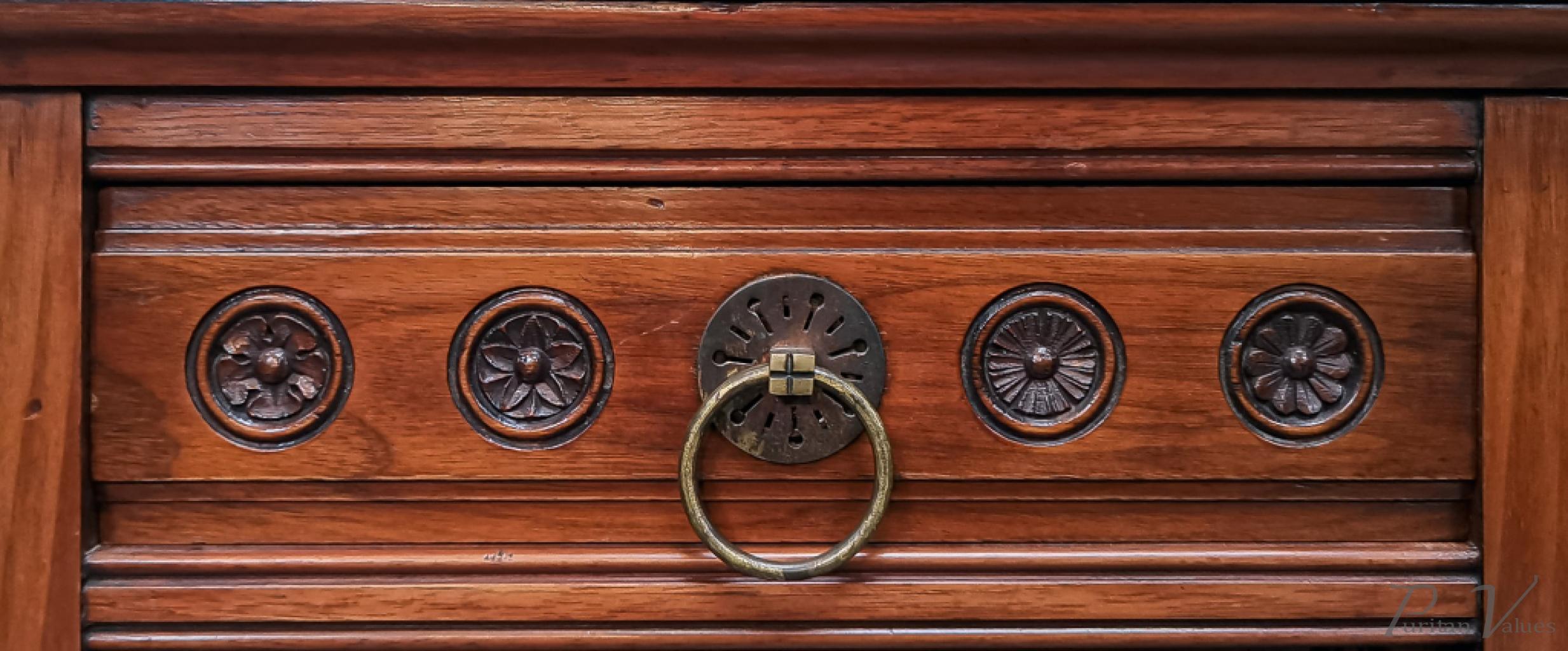
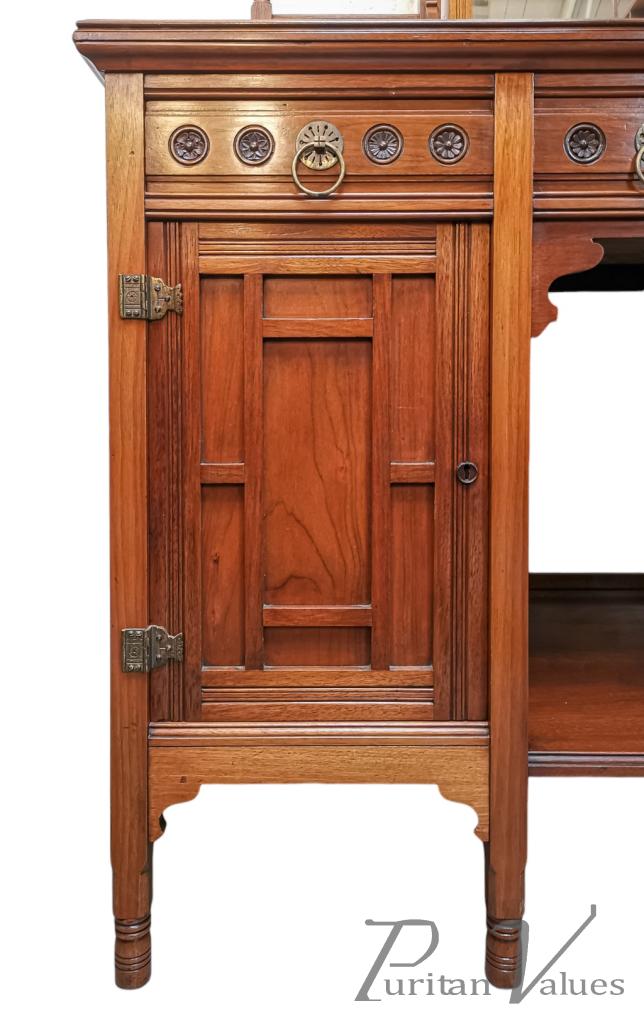
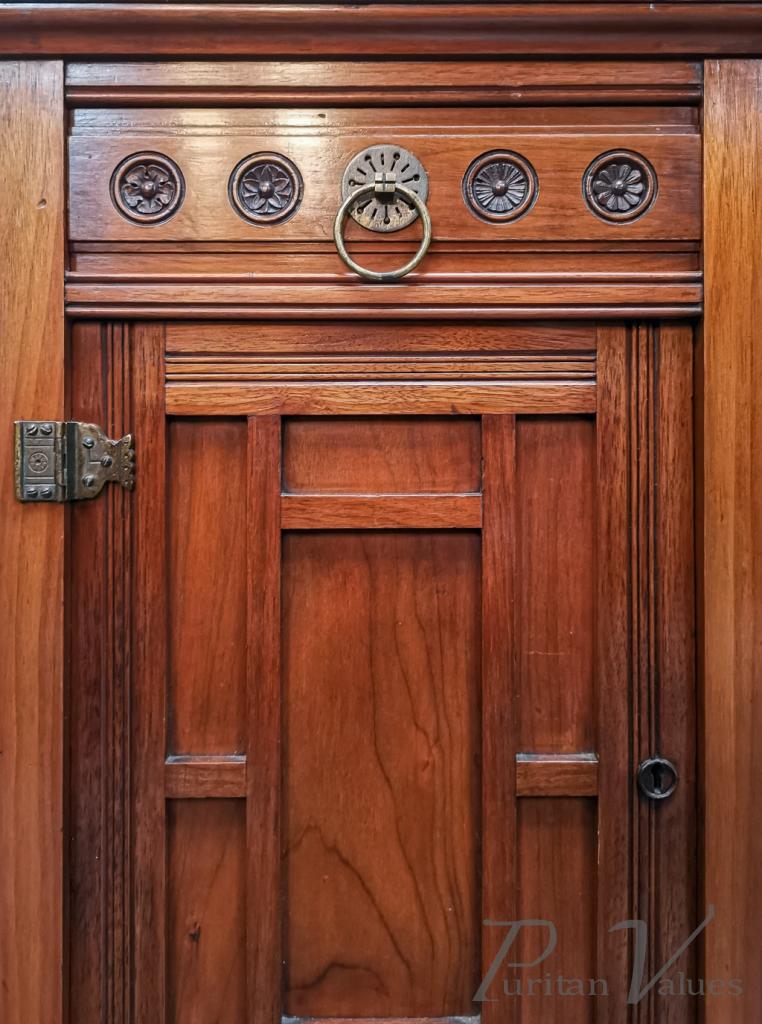
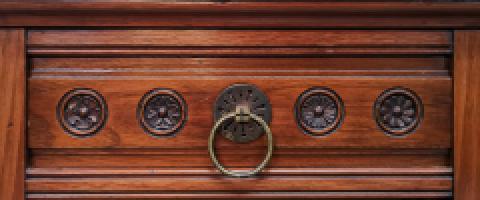
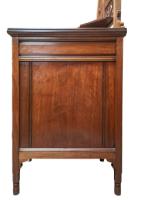
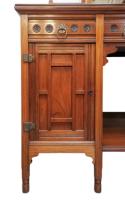
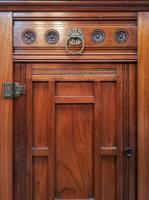
The brass handles to the central three drawers are the same Godwin design used on his iconic Anglo-Japanese sideboards, with simple ring pulls and pierced keyhole decoration to the back plates. Each drawer front is set with a row of carved round devices, a detail seen on other Godwin furniture. Below, the central knee void is framed by a shaped apron and flanked by cupboard doors with Japanese-style fielded panels. These share the same design language as the doors on the Beatrice cabinet illustrated by Susan Weber Soros.*
The dressing table is raised on square legs with turned feet, following Godwin’s interest in furniture raised from the floor for hygiene and practical use. It is also worth noting that Godwin used different finials on the same item of furniture, as seen here where the mirror finials differ from the mirror support finials. A related example can be seen in the Puritan Values Anglo-Japanese cabinet.** Although there is no known drawing for this dressing table, the number of specific Godwin design details used across the piece strengthens the attribution.
References / Provenance
* Susan Weber Soros, The Secular Furniture of E. W. Godwin, page 230, illustration 374, for the Beatrice cabinet and related Japanese-style fielded panel door treatment.
** Puritan Values archive, Anglo-Japanese cabinet, for comparison with Godwin’s use of differing finial forms within the same piece of furniture.
*** Victoria and Albert Museum, E. W. Godwin sketchbook reference to be added when the swift drawing image or accession details are available.