


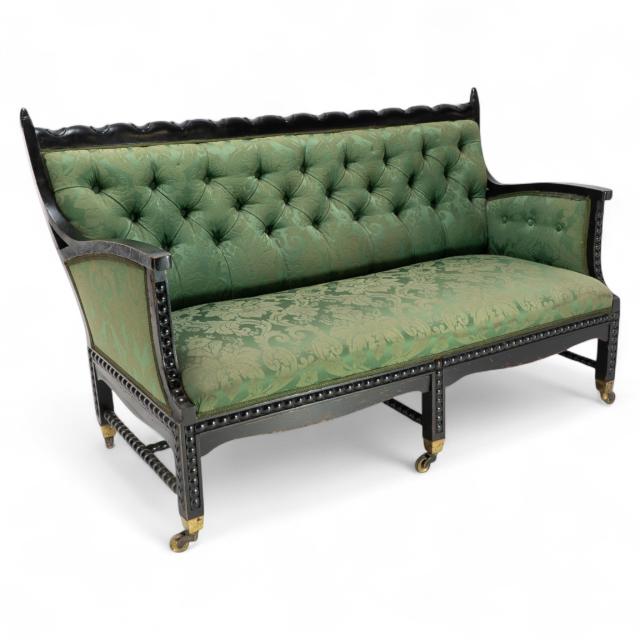
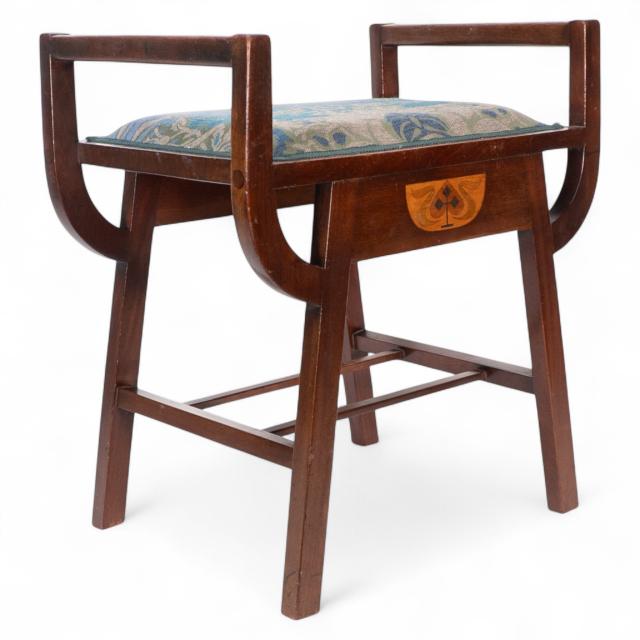
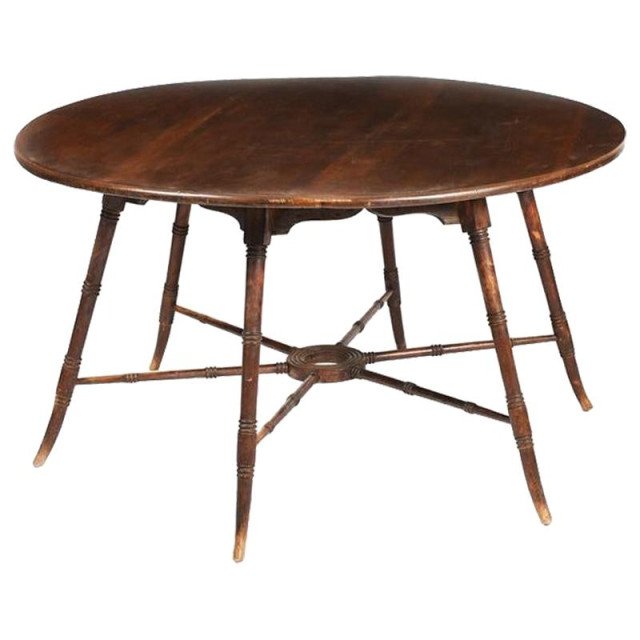
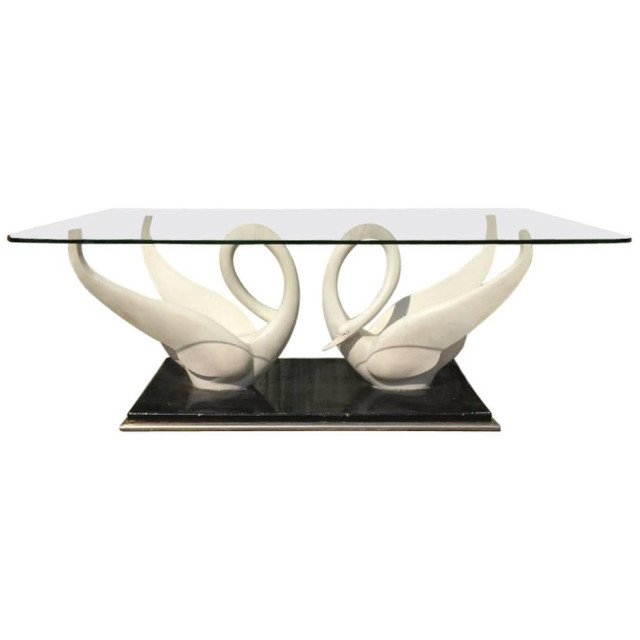
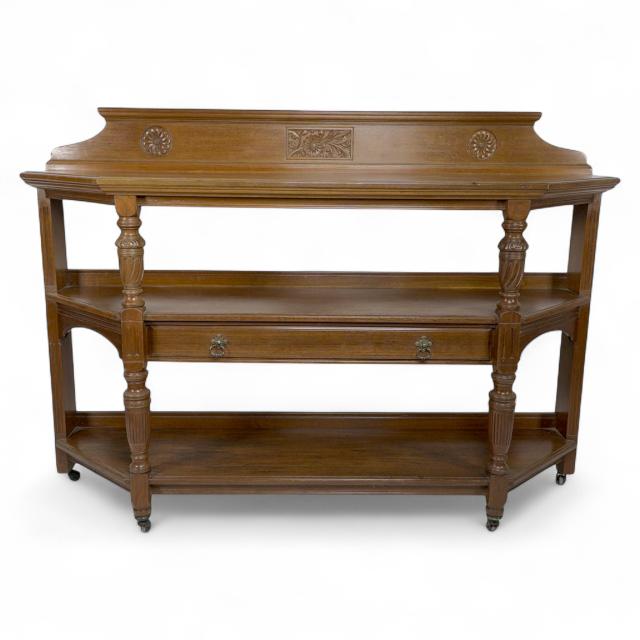
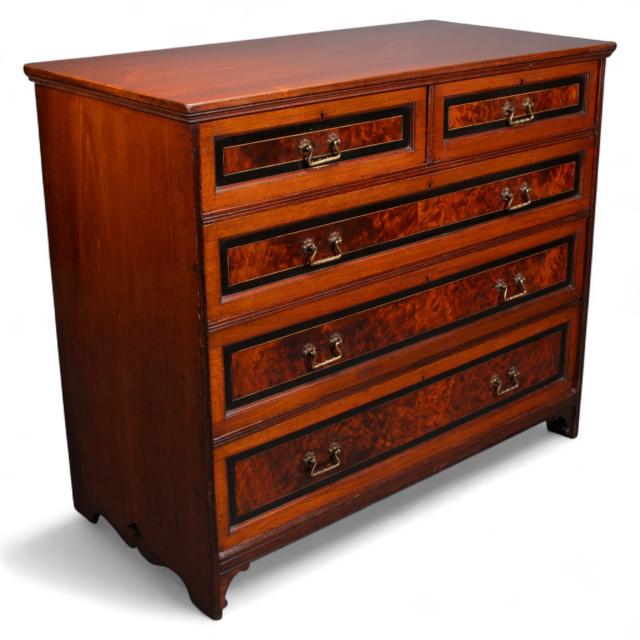
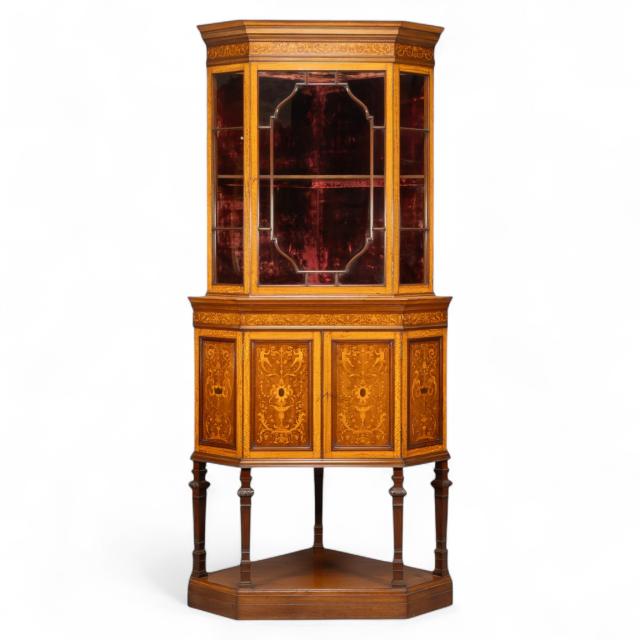
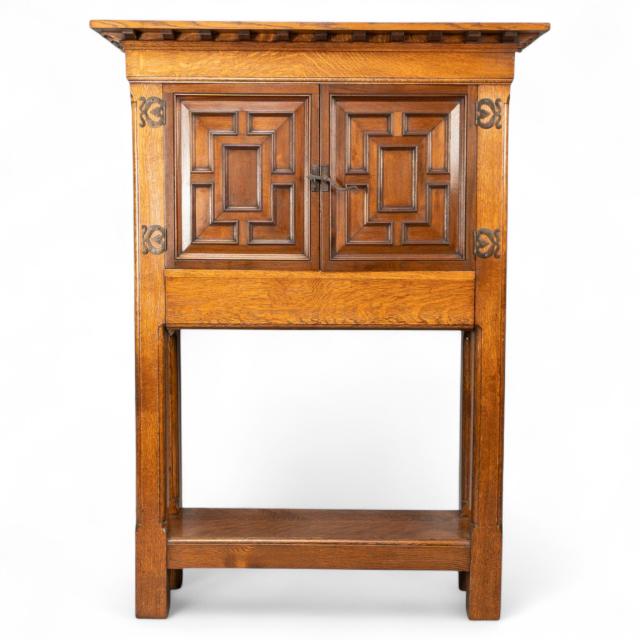
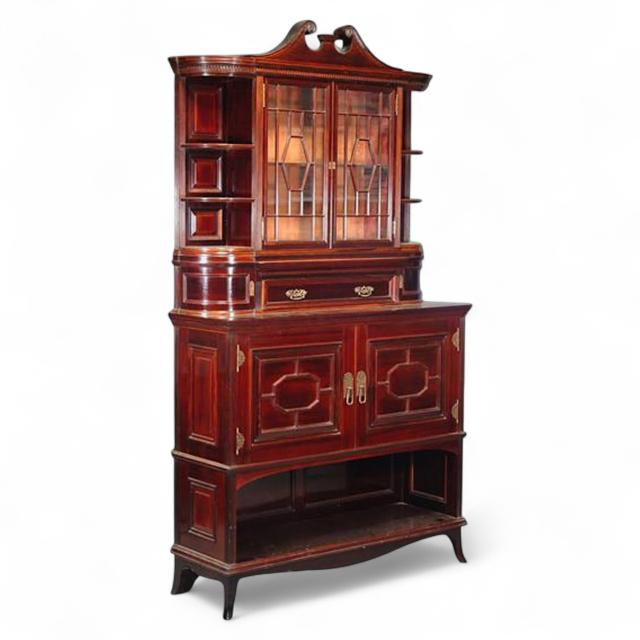
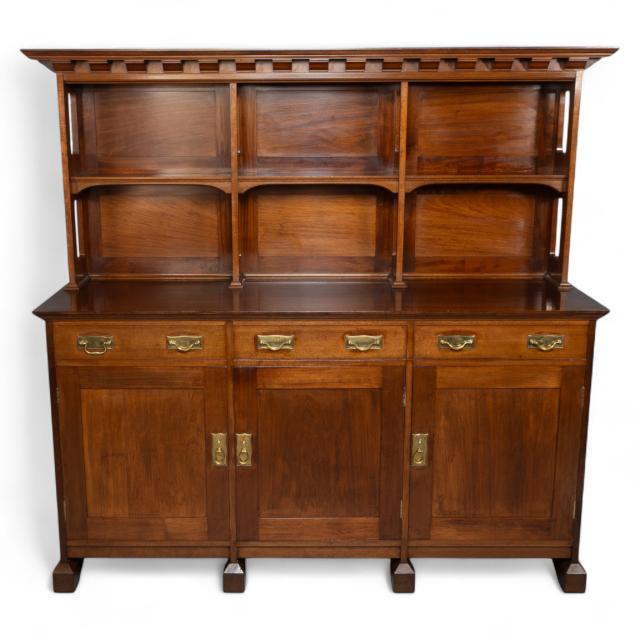
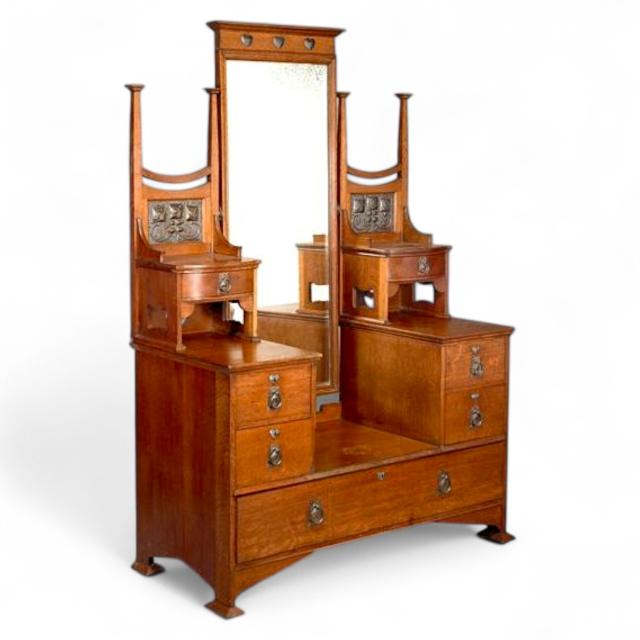
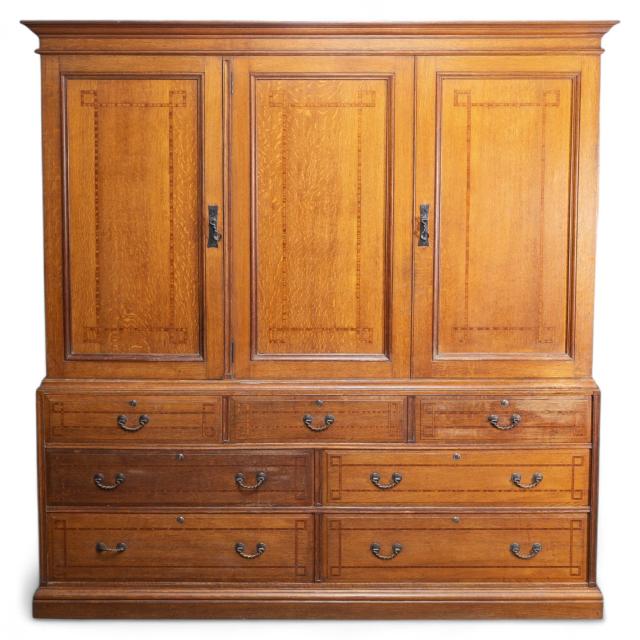
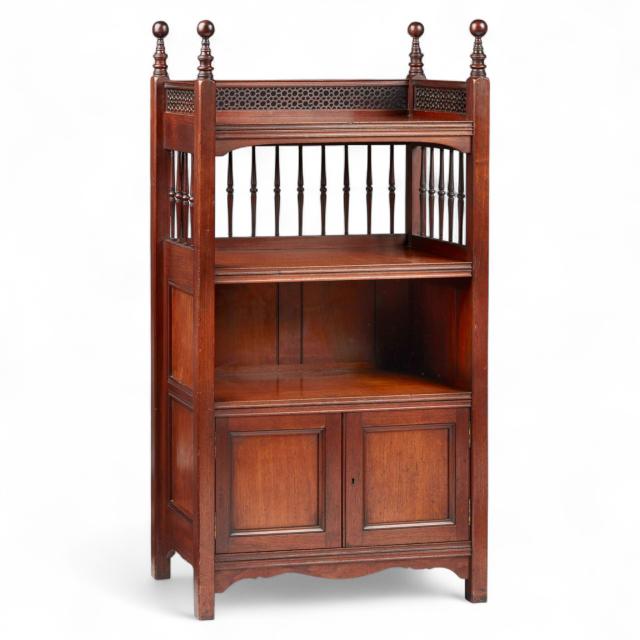
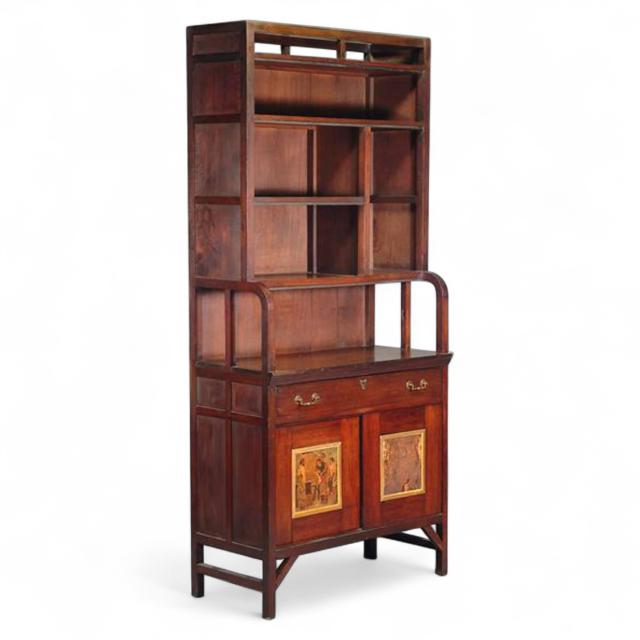
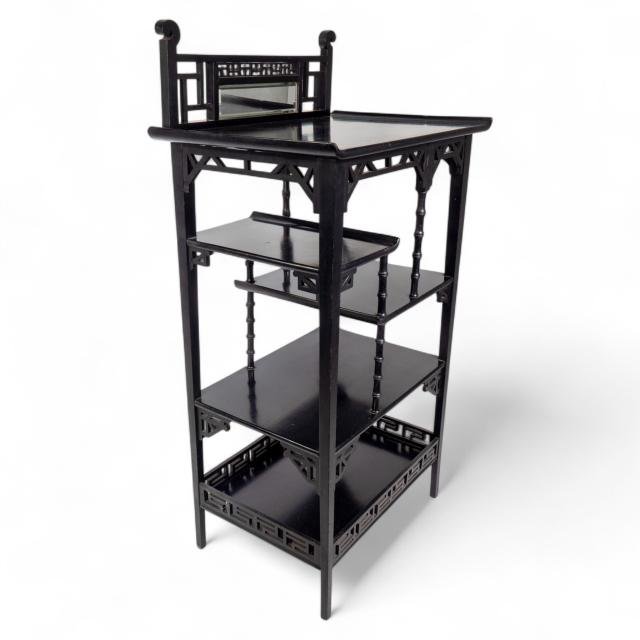
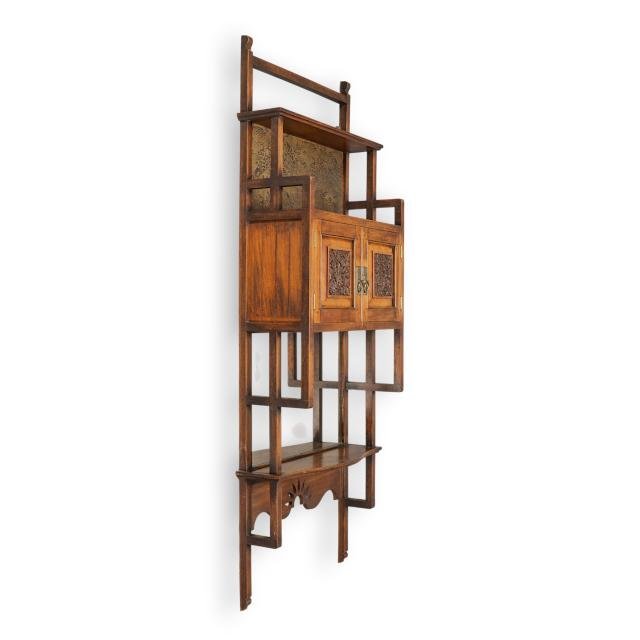
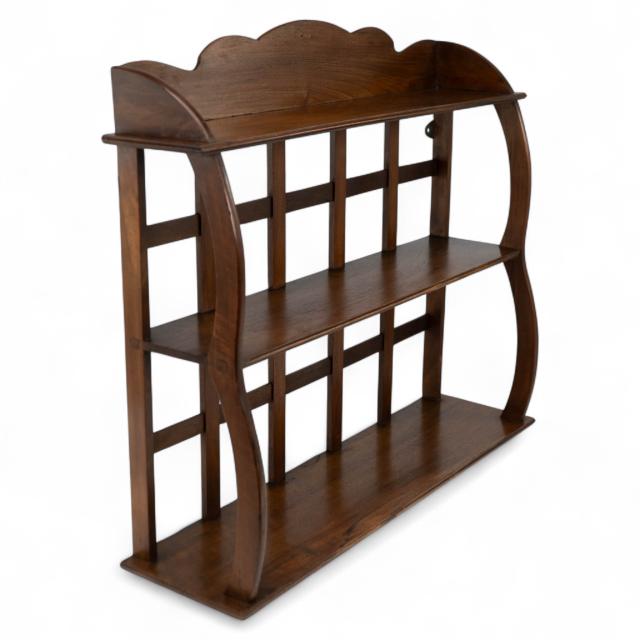
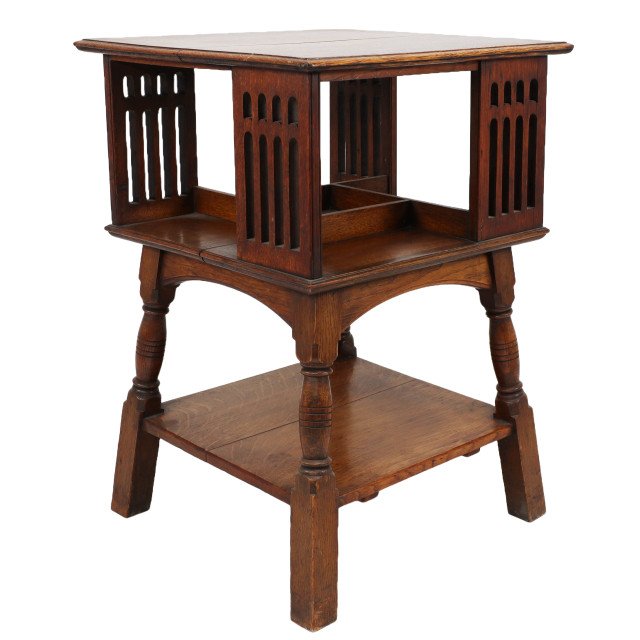










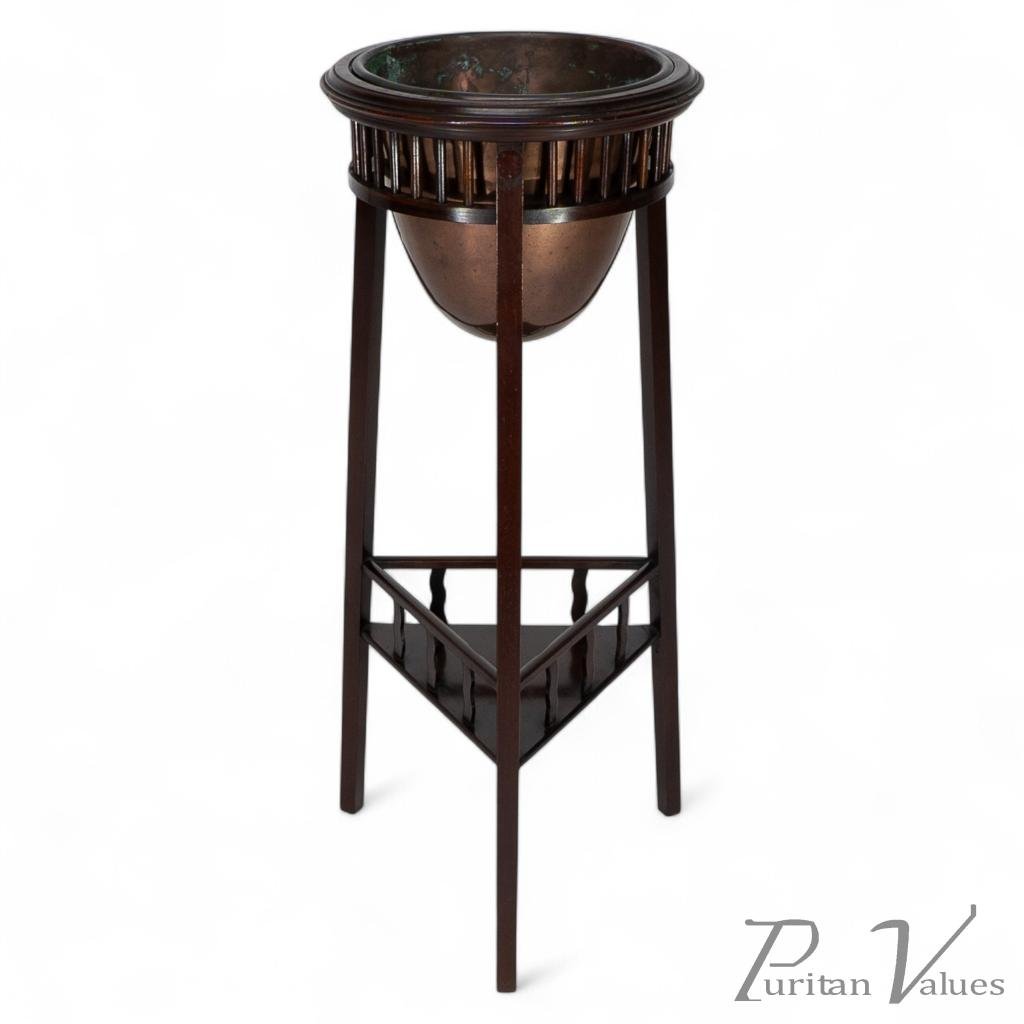
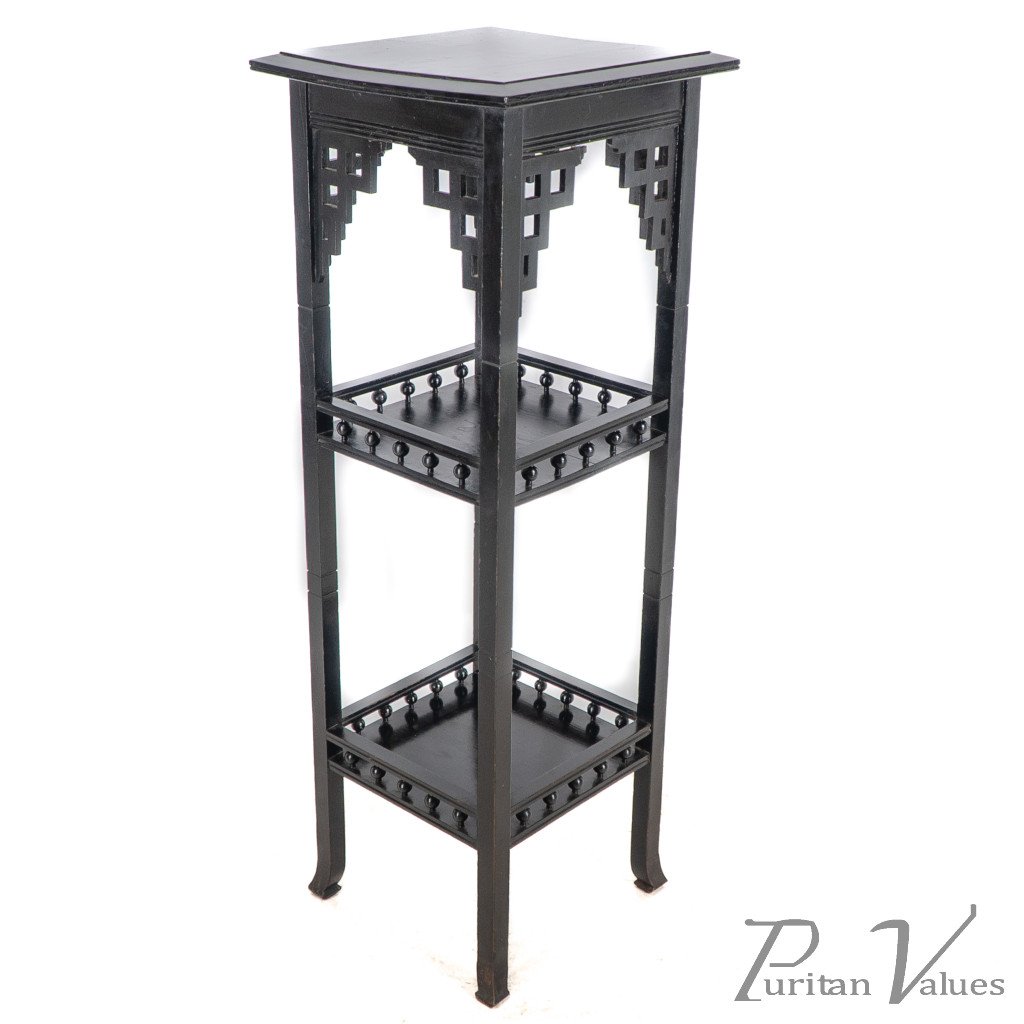
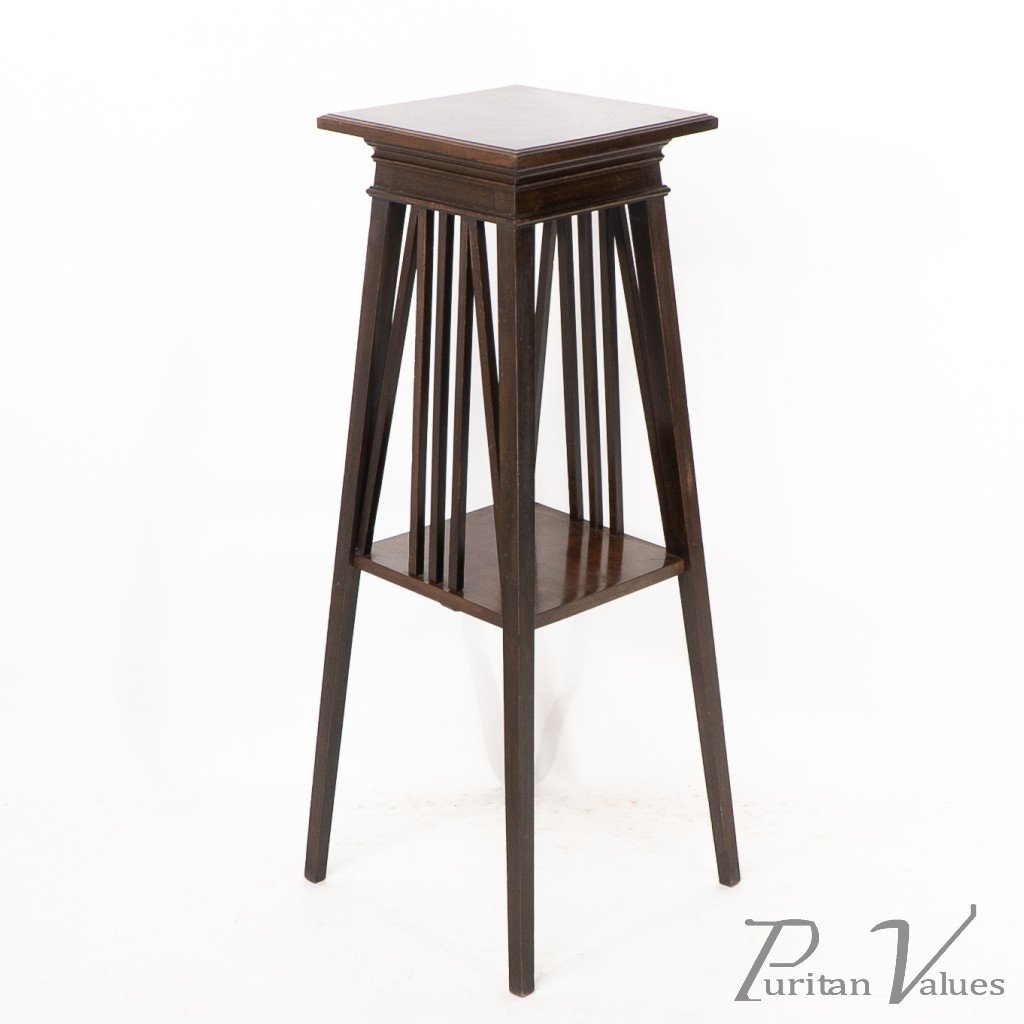


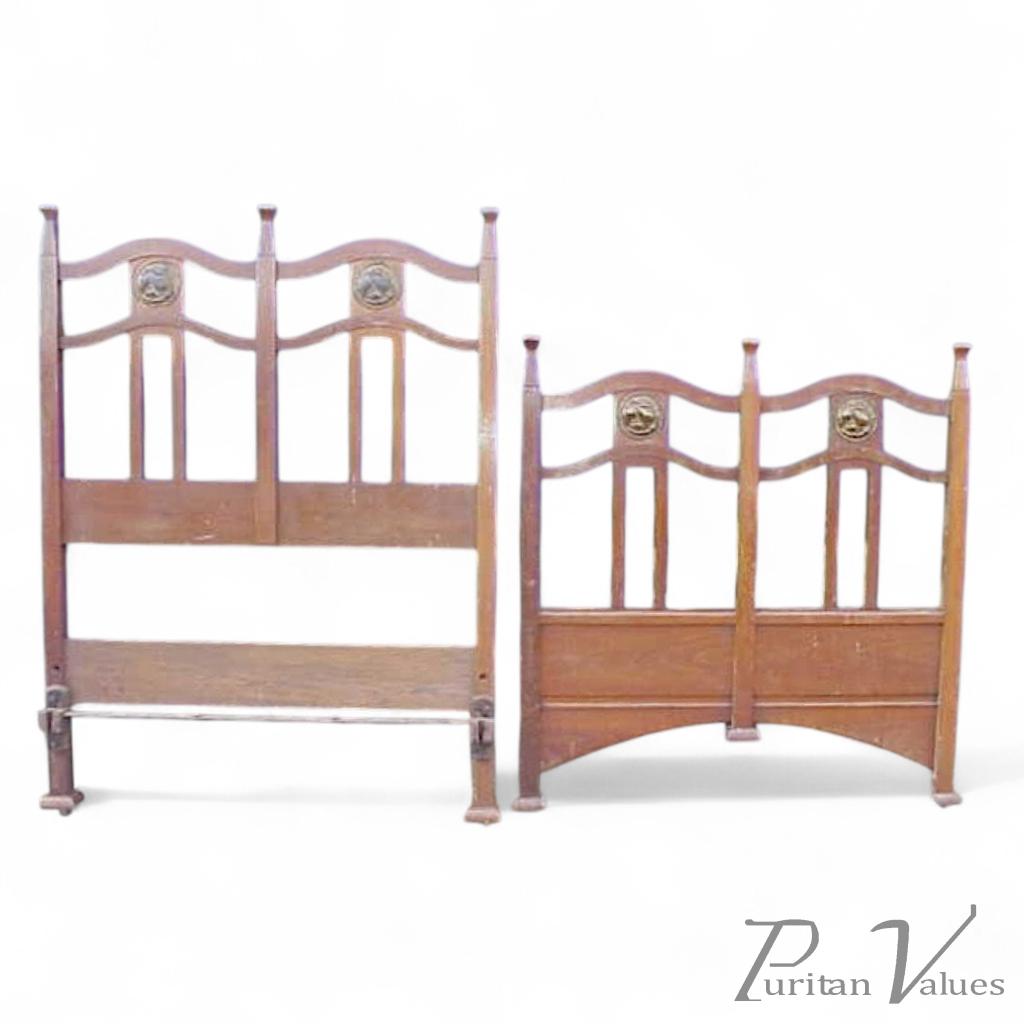




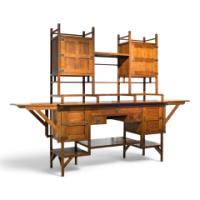
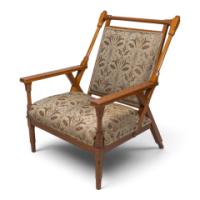


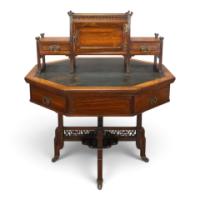


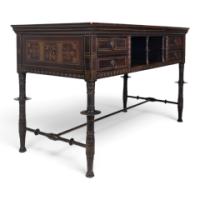



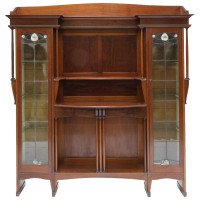
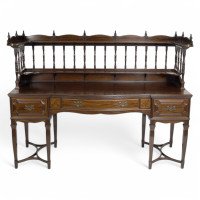


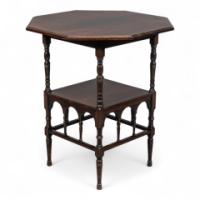
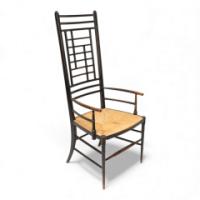
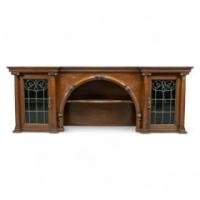

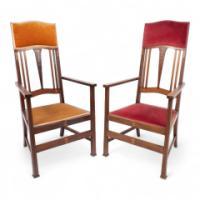
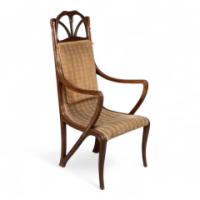
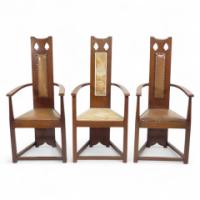
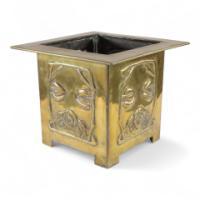
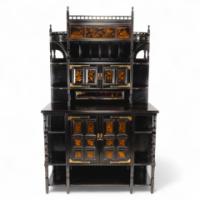











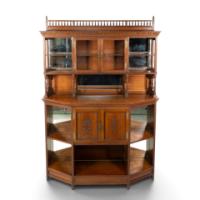




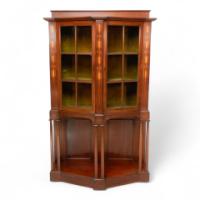





















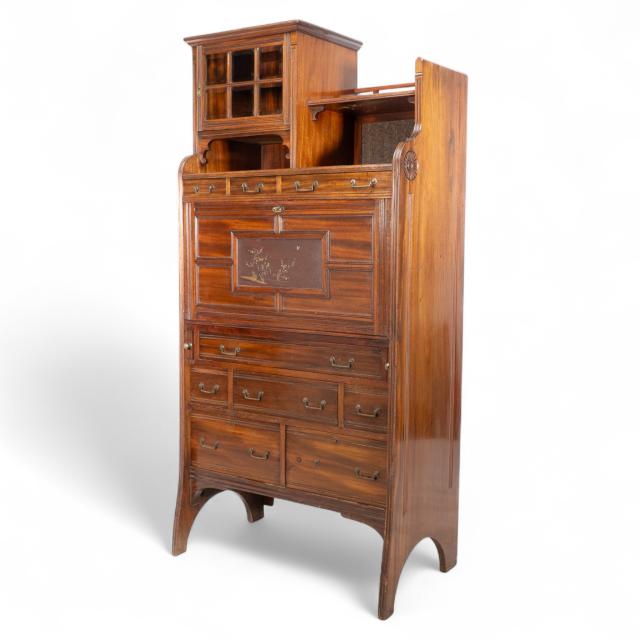
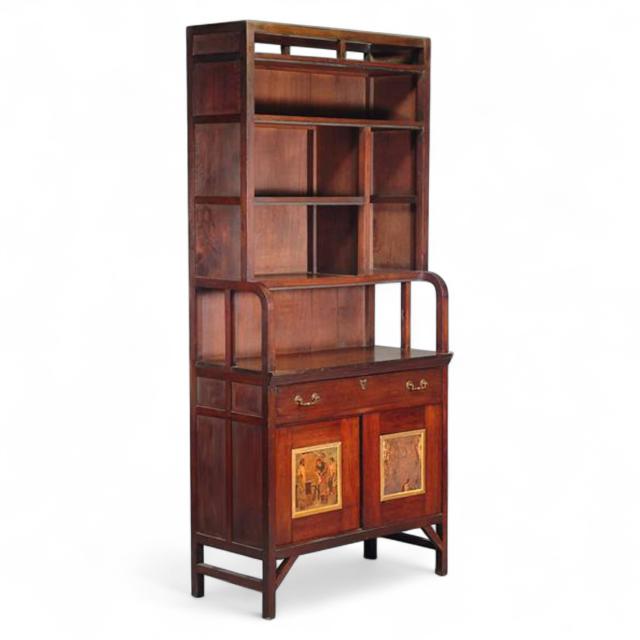
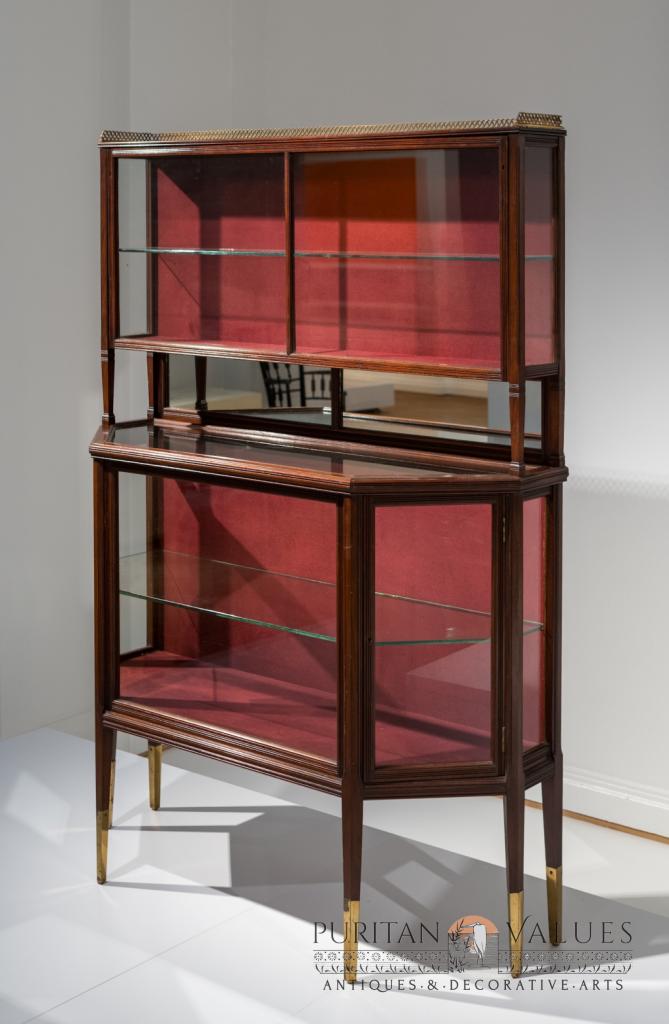
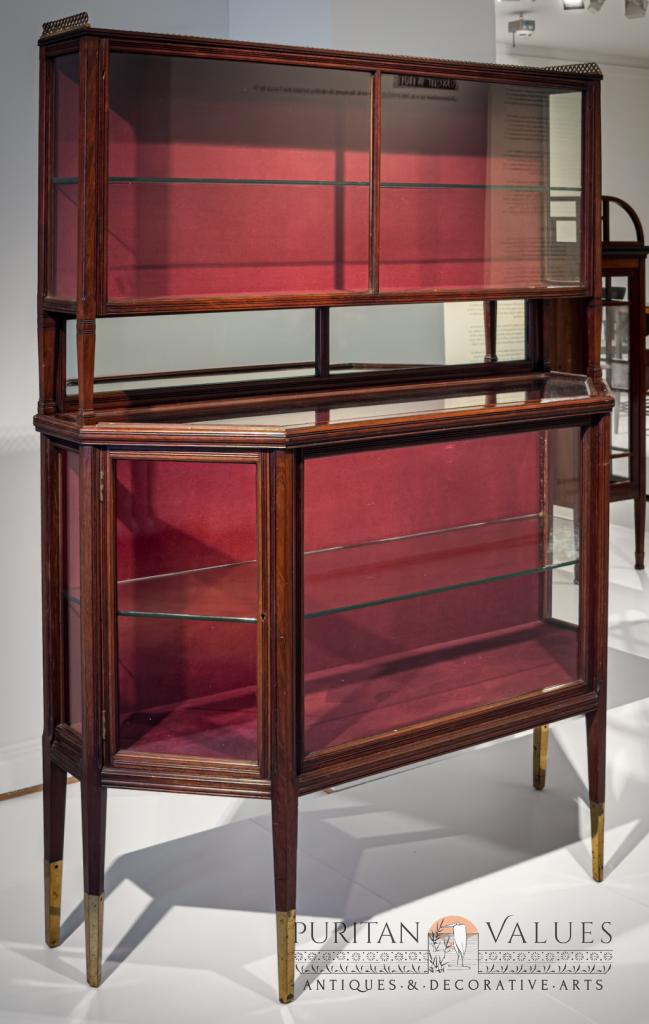
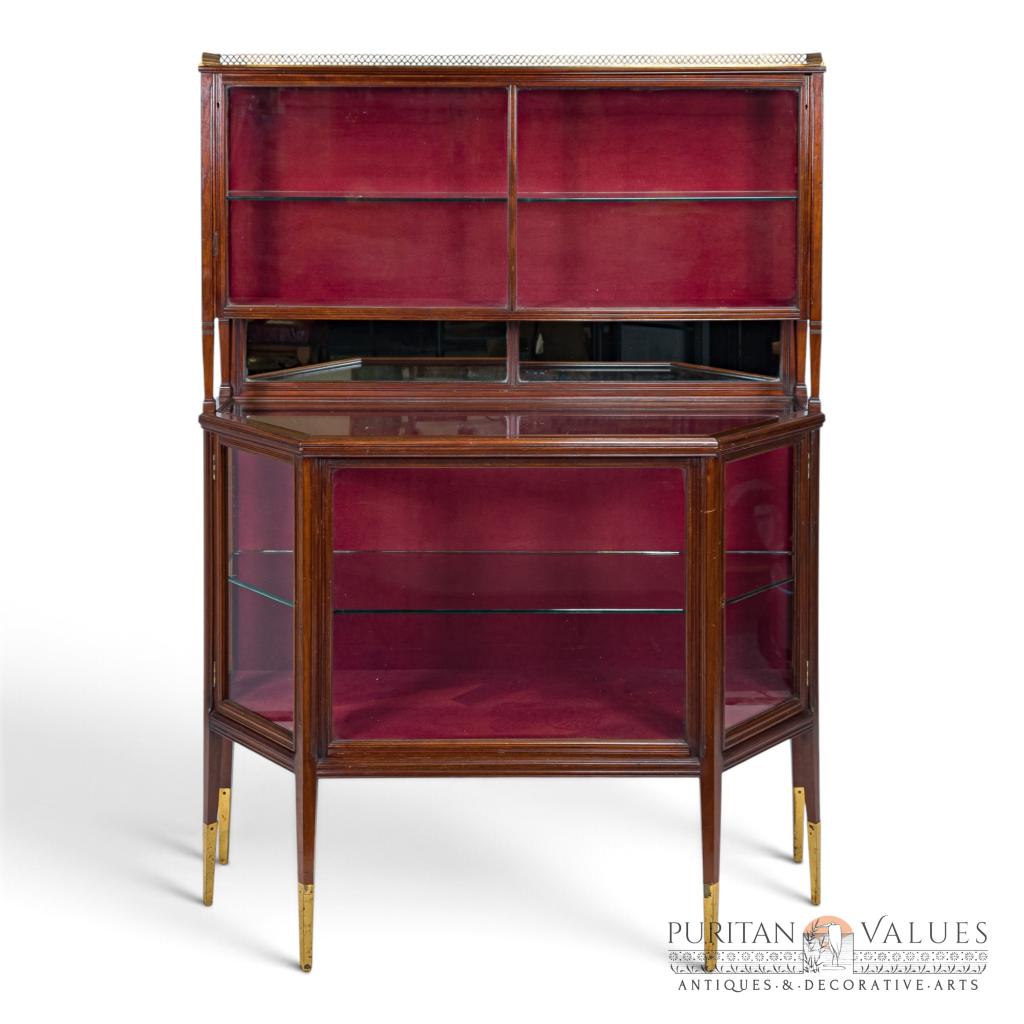
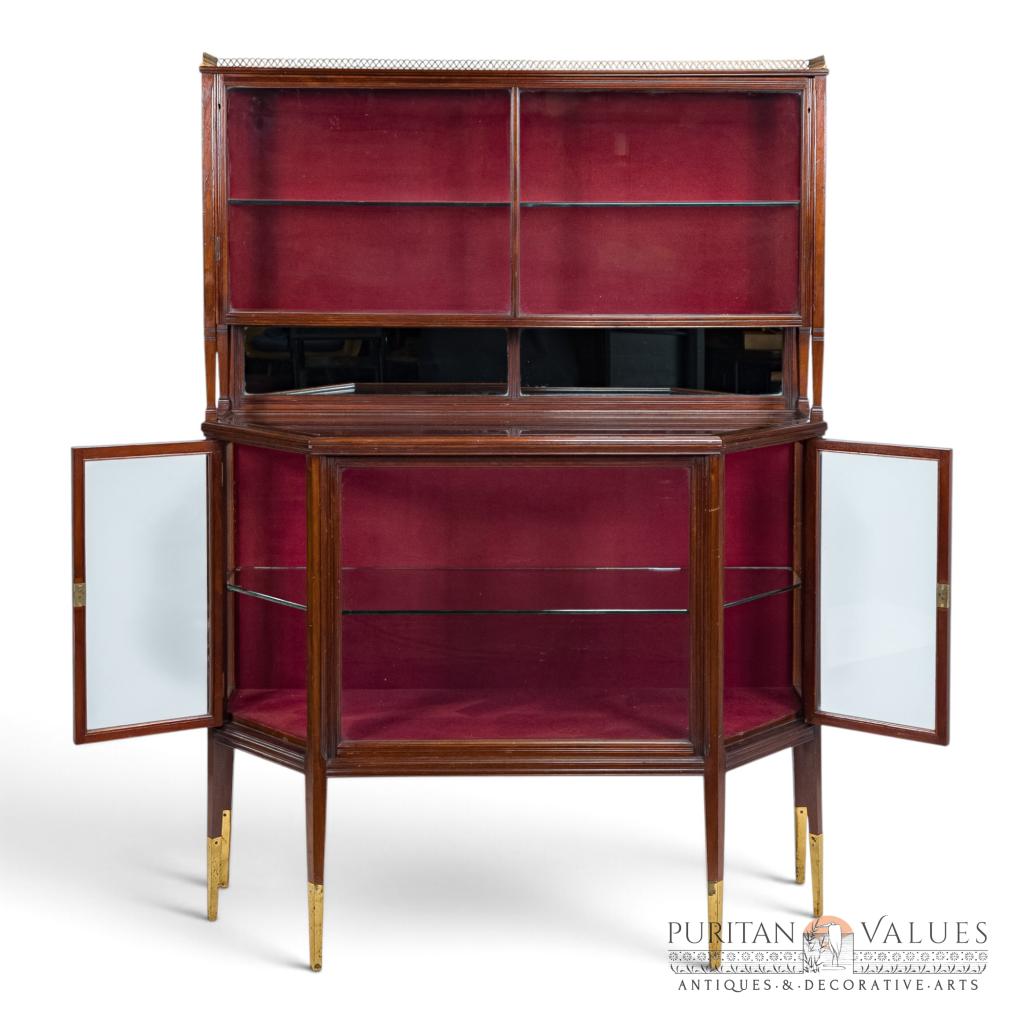
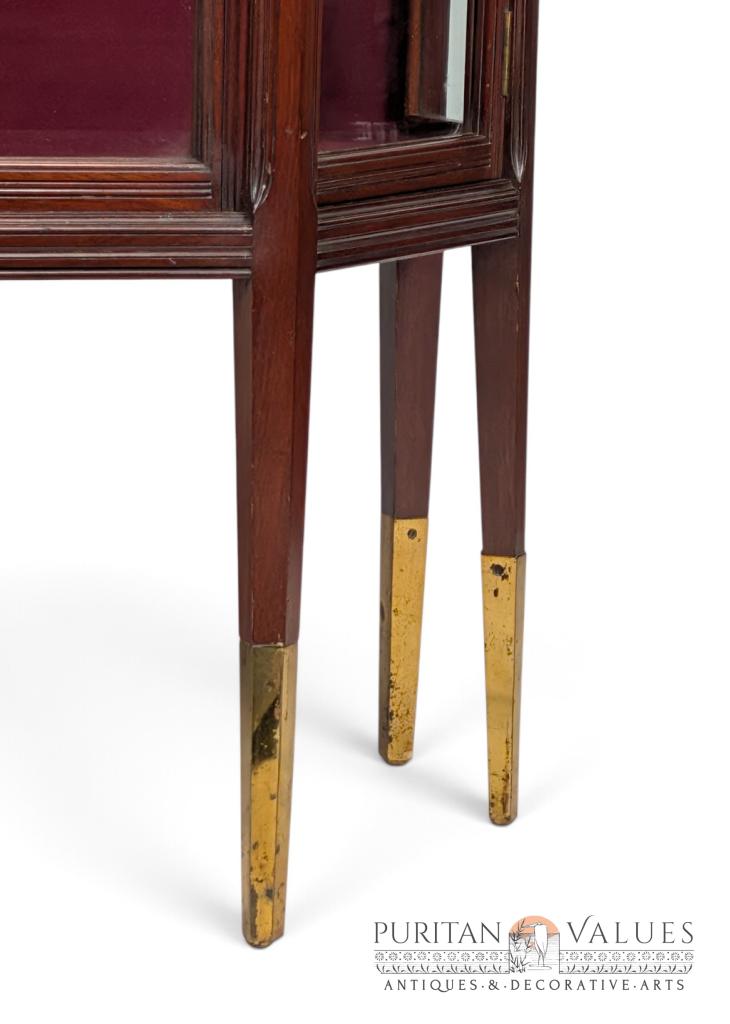
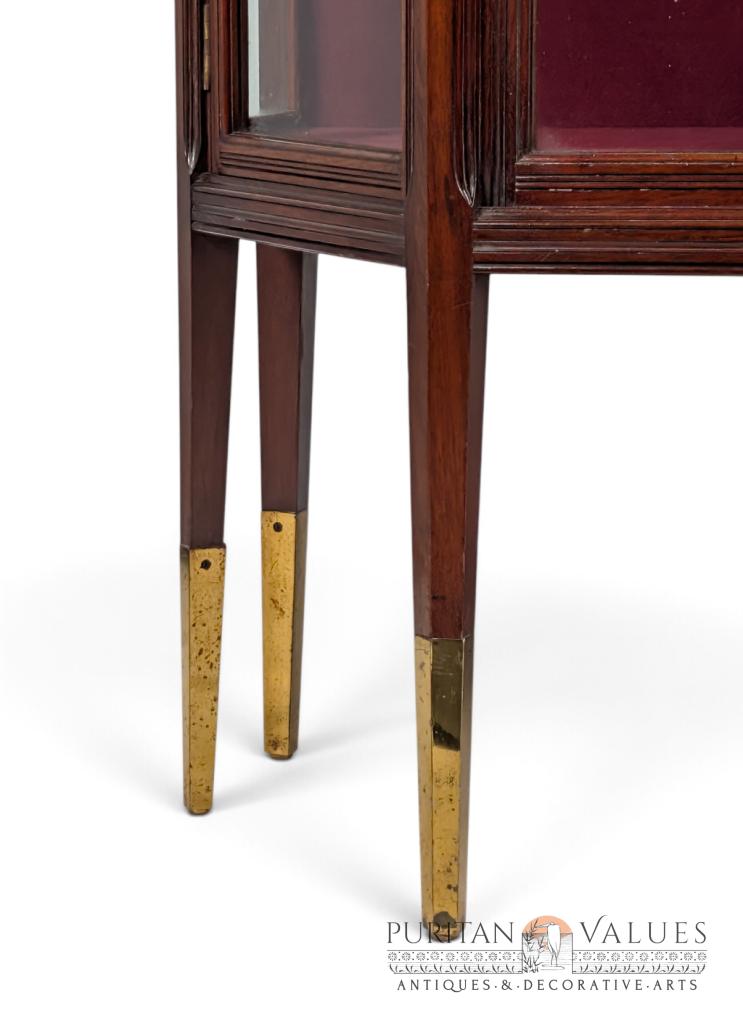
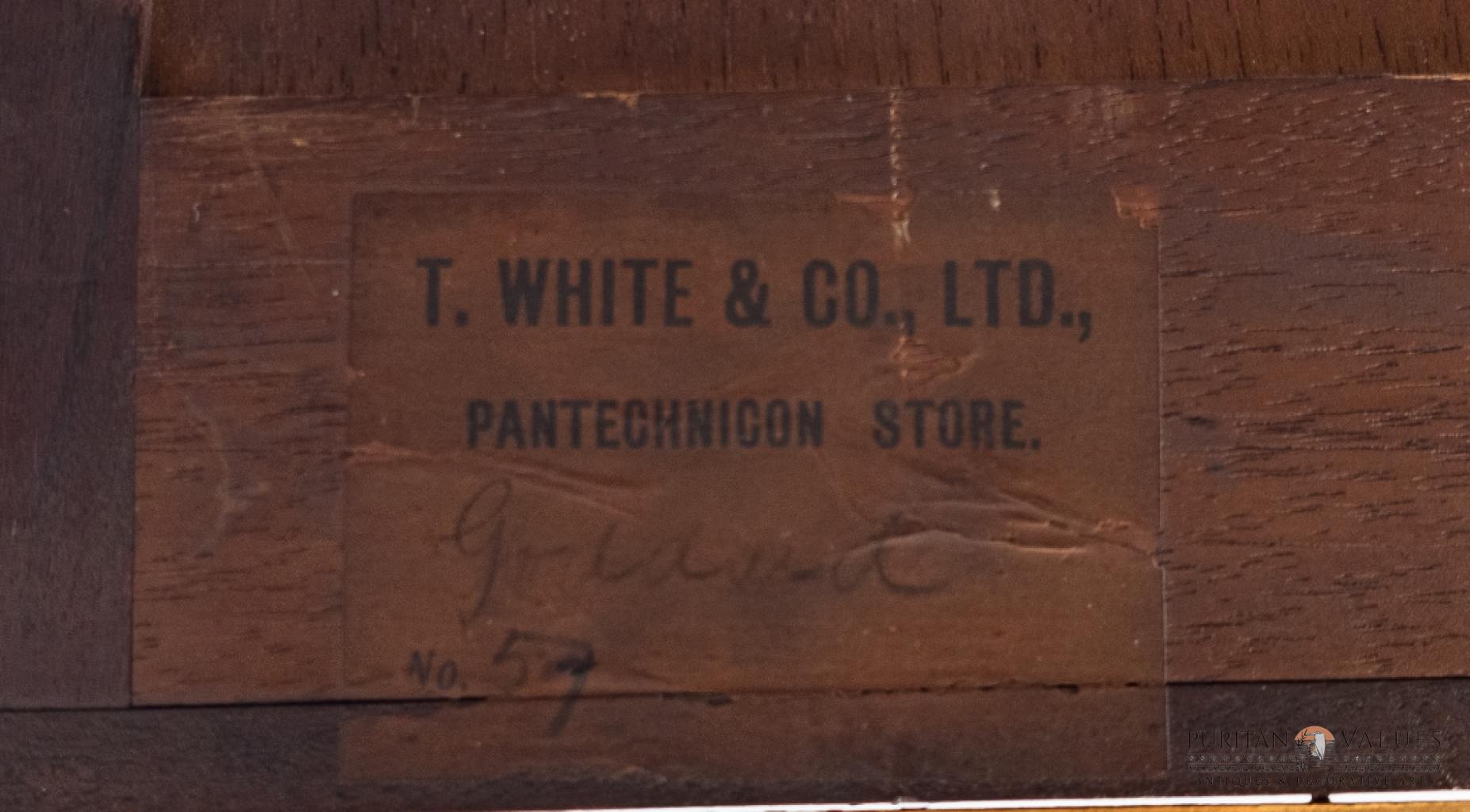
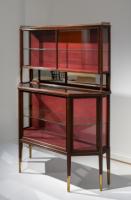
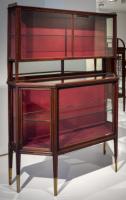
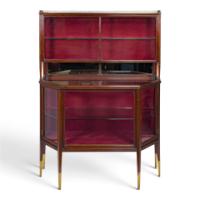
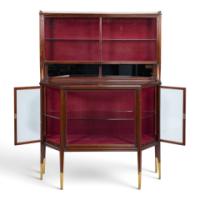
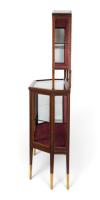
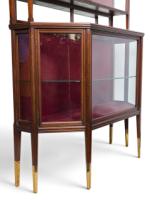
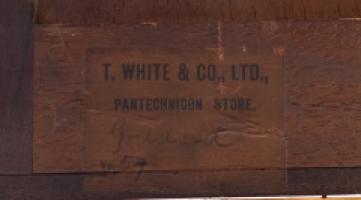
E. W. Godwin probably made by Collinson and Lock. An Anglo-Japanese mahogany display cabinet with brass sabots. Circa 1880.
Price on Application
This item is price on application due to its rarity and importance.
E. W. Godwin attributed. Probably made by Collinson and Lock.
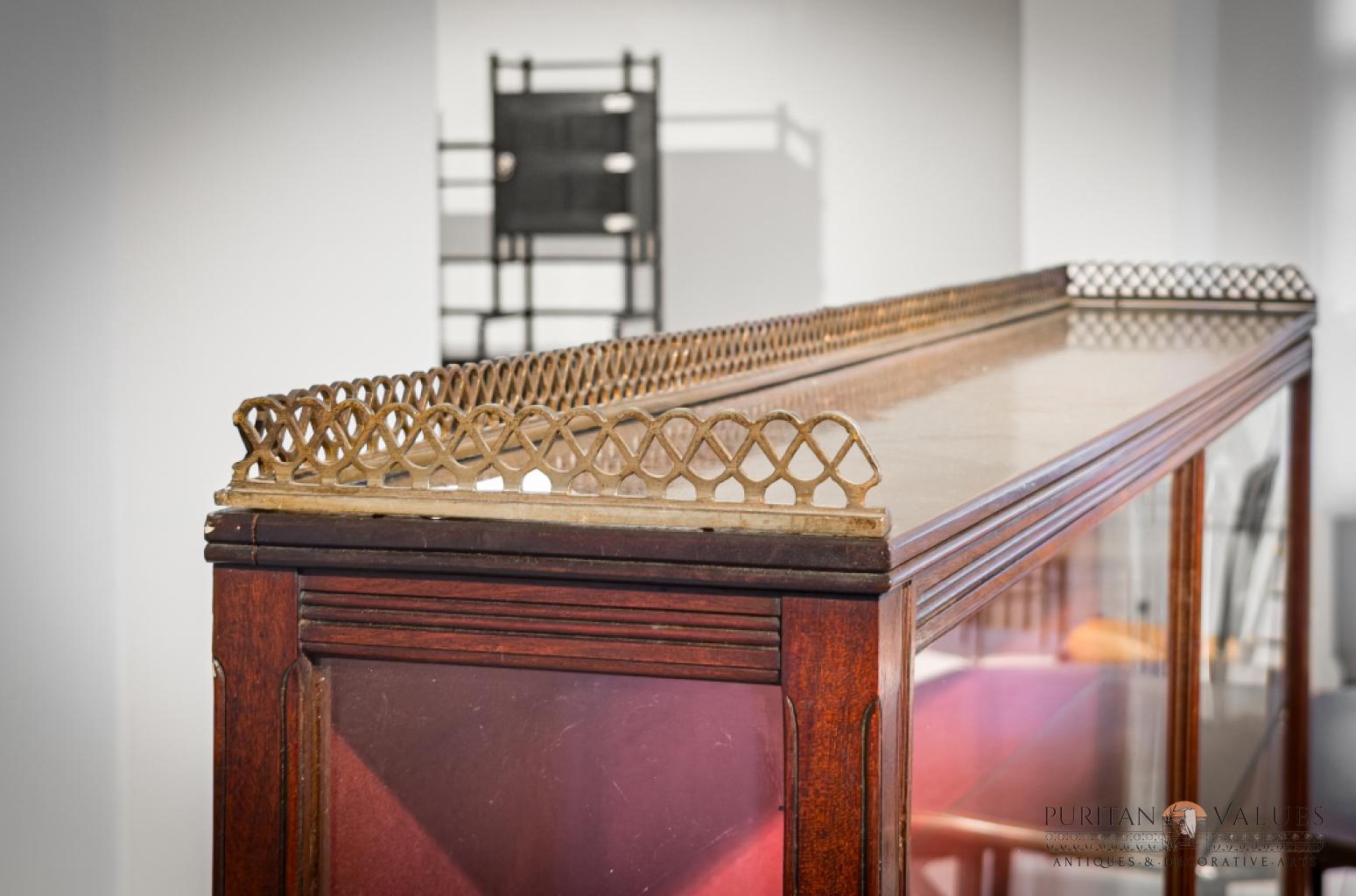
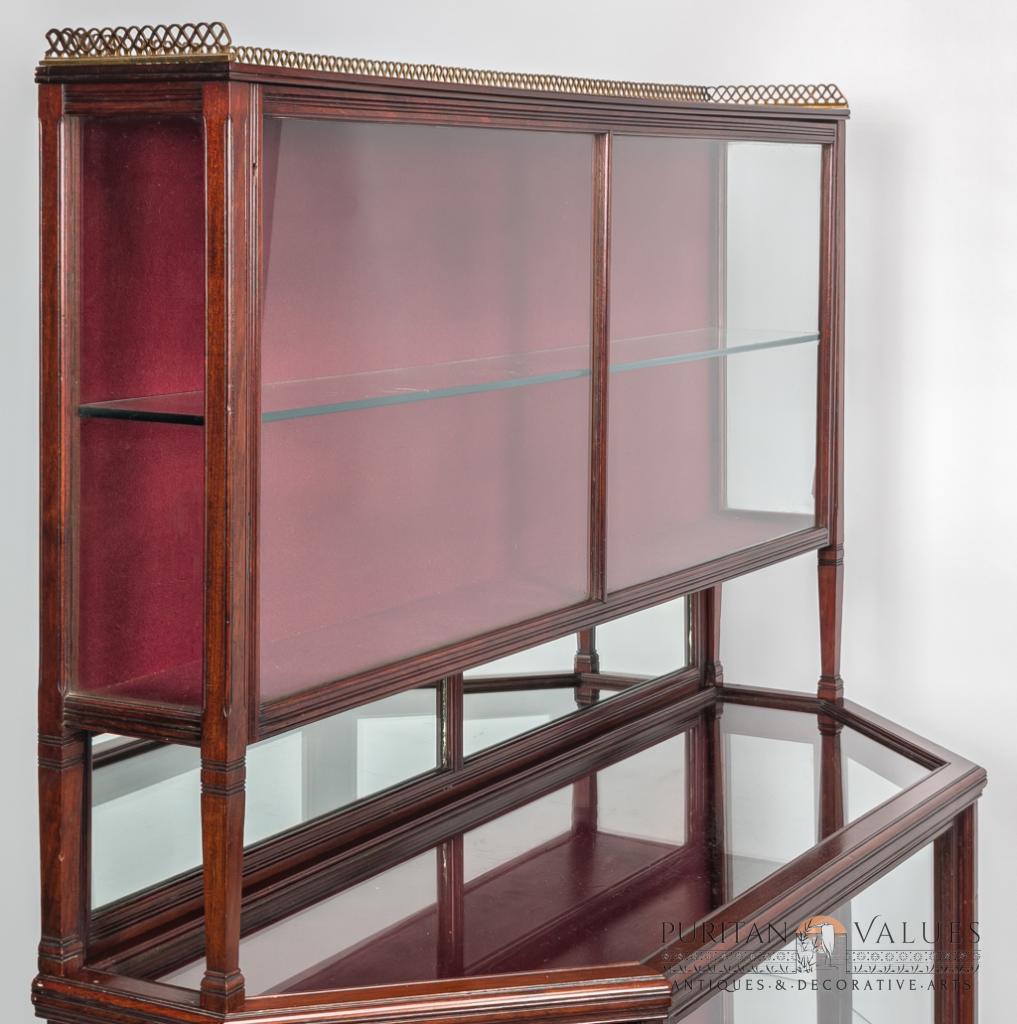
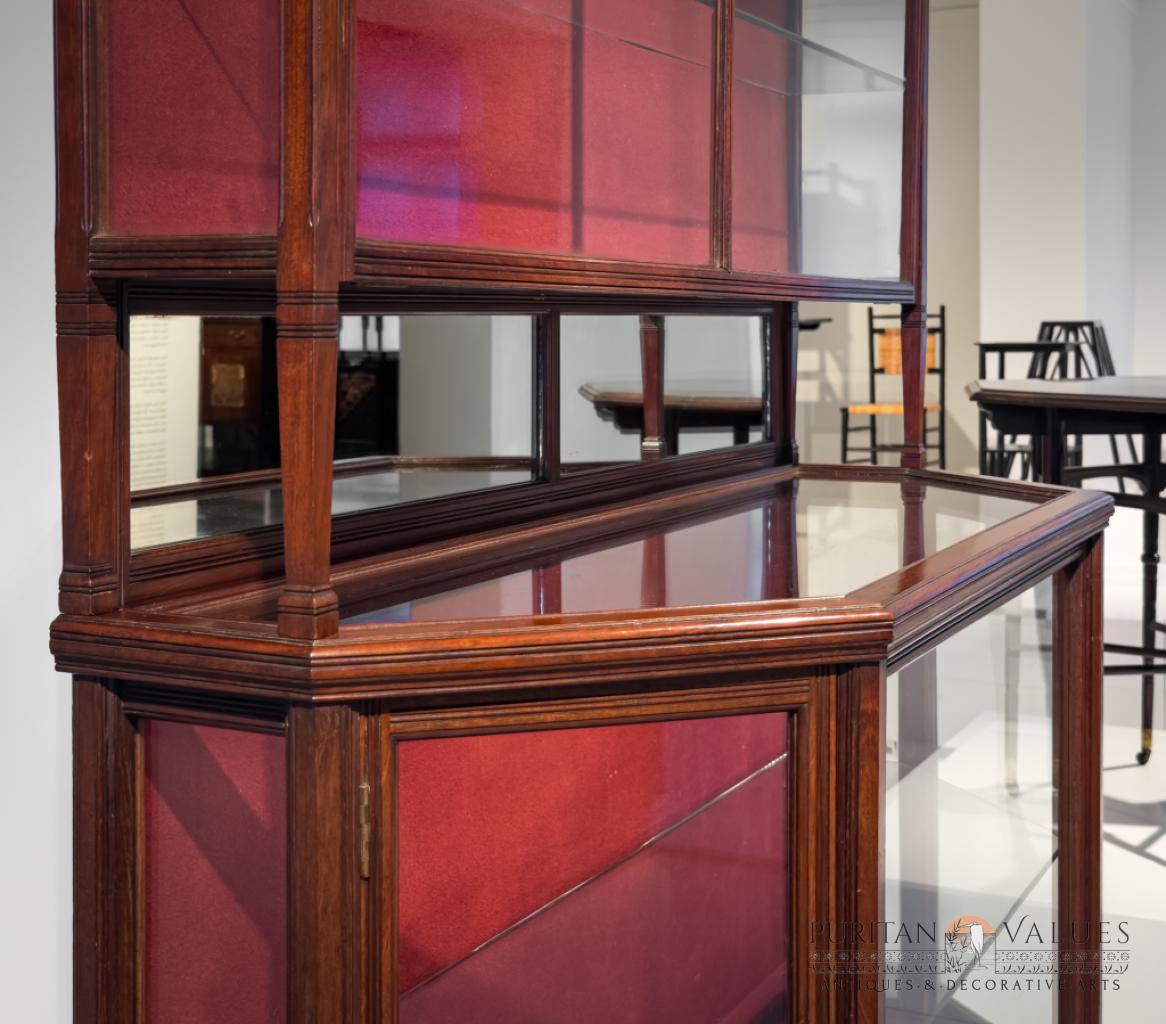
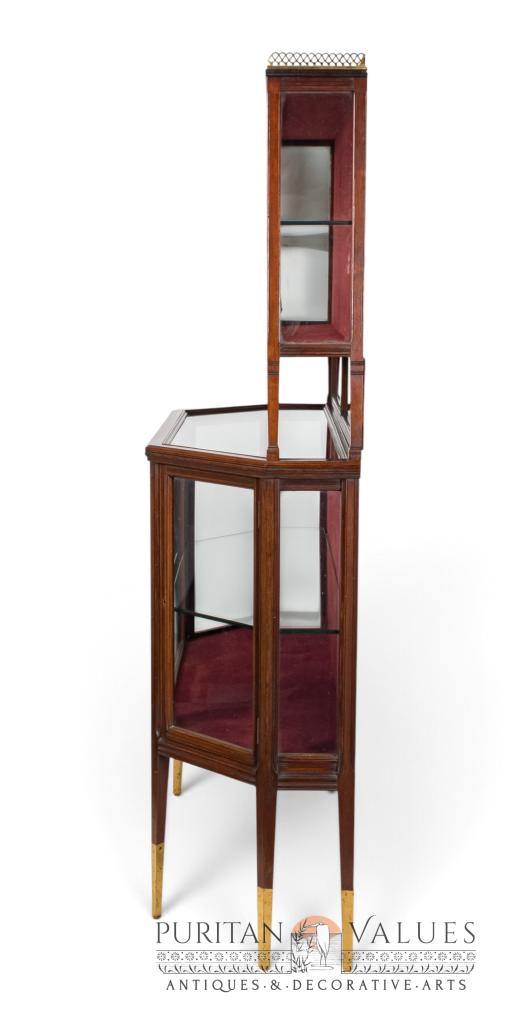
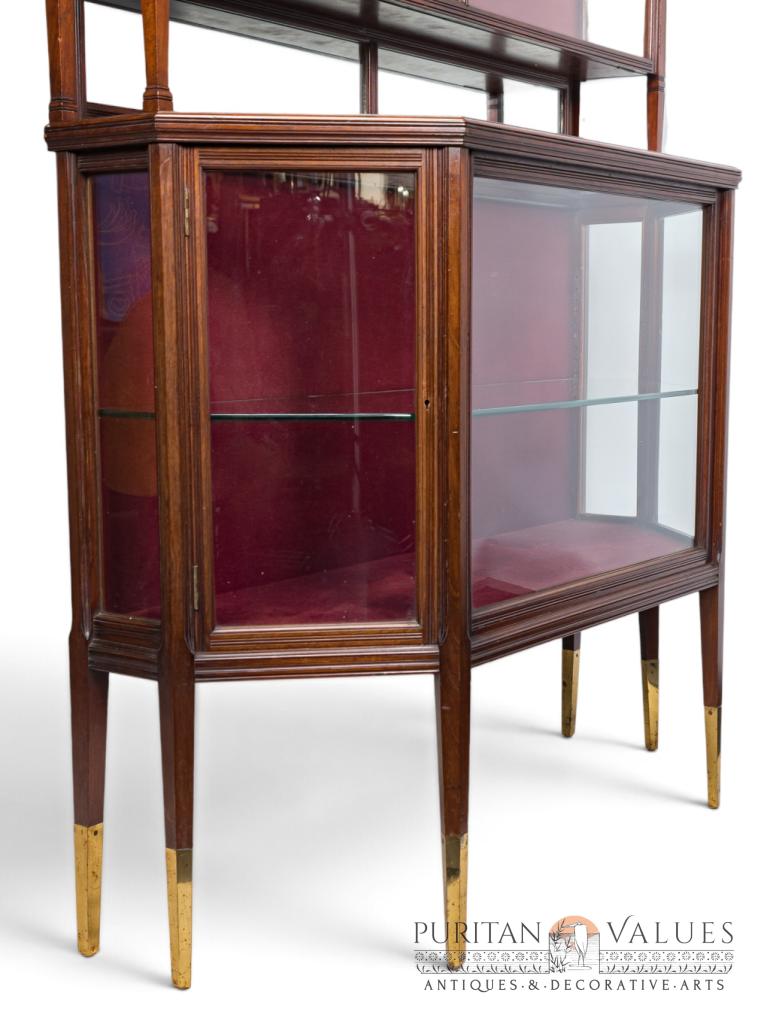
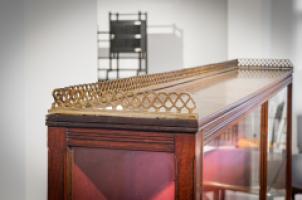
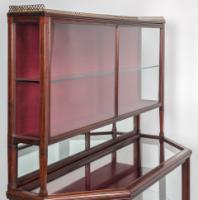
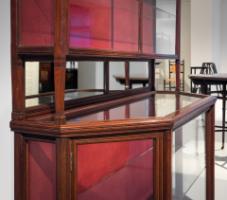
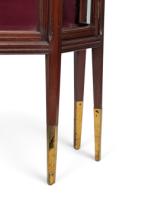
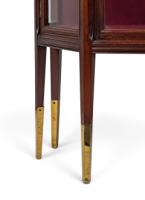
An Anglo-Japanese fine quality mahogany breakfront display cabinet. A three quarter brass gallery frames the top, with a full width fold down door arrangement, the lower front cabinet has a glass top giving an option to view from above. The lower cabinet has side doors set back from the angled sides. Raised on six 'pentagonal' tapering legs and six 'pentagonal' brass feet. When one considers the six legs in relation to the overall angular design and the quality of it all, it is not an easy cabinet to make but the economy is still there in the sparseness of the materials used giving it the progressive light modernist style that Godwin preferred that just isn't found in late 19th century furniture outside of Godwin's design repertoire.
Another point that I find interesting and I might be sticking my neck out but by the time Godwin died furniture in general became more economic and by the time the Edwardian period arrived the furniture manufacturers of that period were consistantly making furniture using less materials.
The Edwardian period is well known for its 'thin sticks' approach, which ironically was what Godwin's dearest friend William Burgess affectionatly called Godwin. Another affectionate nickname for Godwin used by Ellen Terry and friends of Godwin was 'The Wicked Earl', and rightly so as Godwin always had an eye open for the lovely ladies of his time.
Provenance: Paul Reeves. Bröhan Museum.
The design of this cabinet follows 'thin sticks' obsession with solid and void, flat surfaces, and multi legs with brass sabots.
Width: 44.49 in (113 cm)
Depth: 14.96 in (38 cm)
1870-1879